ZARA "LE DINER"
Short film · Snowing Madrid
A sixteen-minute short film for Zara, set in a Madrid restaurant.
Our part is outside the window: the city buried under a Filomena, generated from Street View plates of the real streets in a week, because you cannot wait for that weather or build a snowed avenue.
- Client
- Little Spain
- Media:
- Film
- Type:
- Commercial
- Published:
- DEC 2025
Credits
AI production — Arantxa Barcia. Directed by Santos Bacana and Rogelio Gonzalez. Produced by Little Spain.
View more +View less −
- Tools
- MITO AI
The job
Snowing Madrid
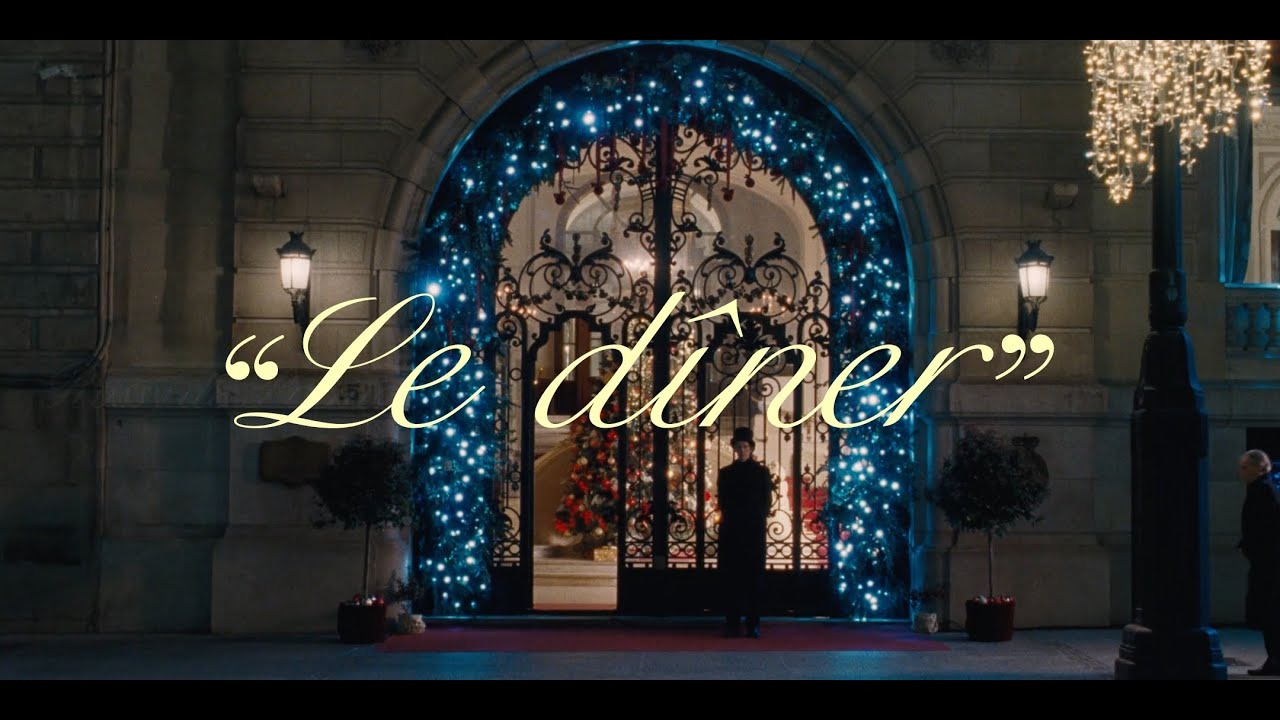
Le Dîner is a sixteen-minute short film for Zara, directed by Santos Bacana and Rogelio González and produced by Little Spain, with Rossy de Palma, Damson Idris, Dylan Penn, Chucho Valdés, Diane Kruger and Vincent Cassel. It is a dinner in a Madrid restaurant that does not go the way anyone expects.
This is not our film. Our part is what happens outside the window. The story needed Madrid buried in snow — a Filomena, the storm that actually shut the city in January 2021 — and there is no way to shoot that on a schedule. The production dressed one corner and filmed a couple skiing past it in ski suits. Everything beyond that corner is generated: the avenue under a metre of snow, the drone looking straight down it, the rooftops white to the horizon.
It arrived on the fourth of December and it was delivered within the week. That is the whole reason a sequence like this gets made this way: you cannot wait for weather, and you cannot build a snowed avenue.
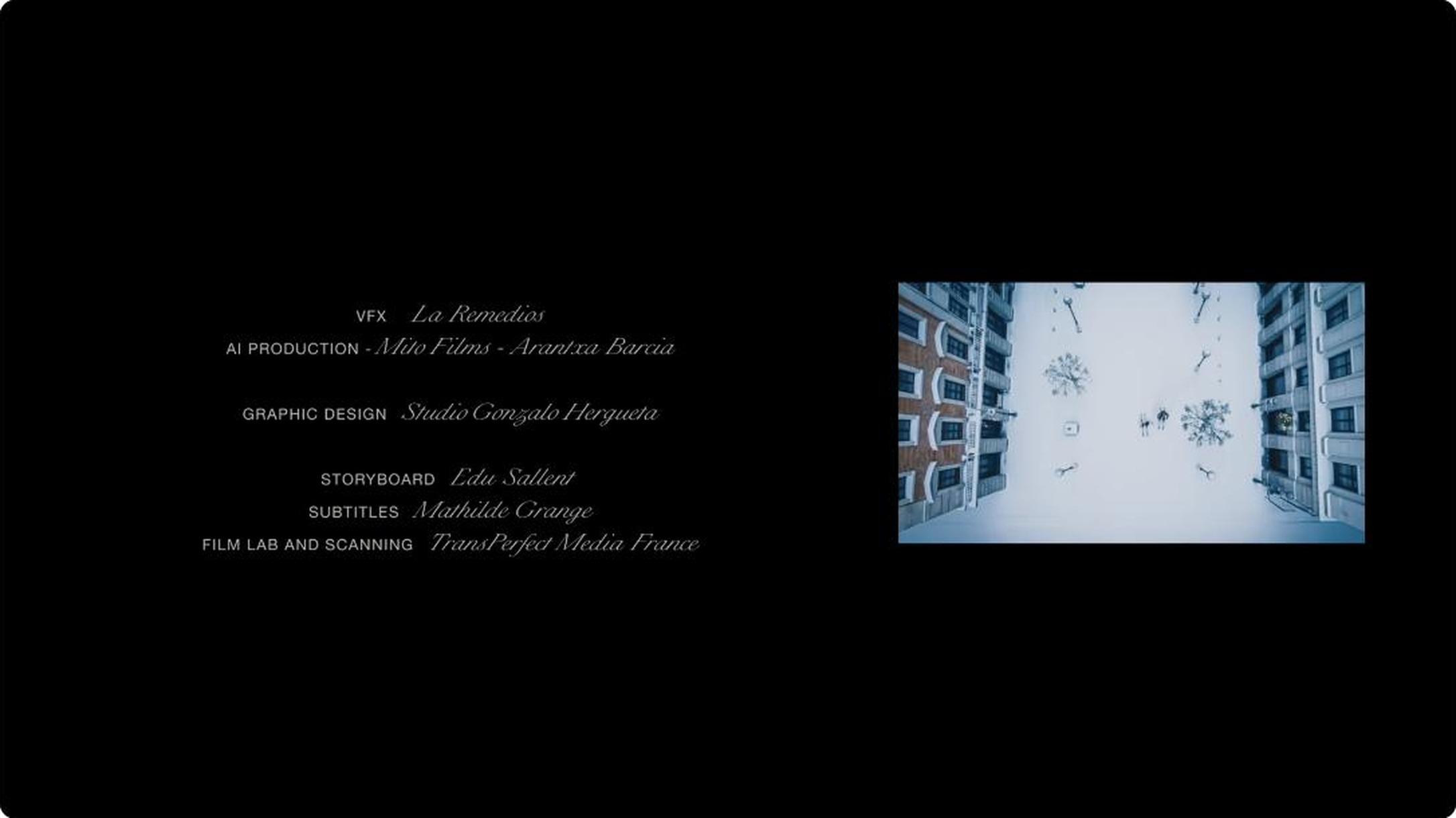
Arantxa Barcia made every generated frame. The film’s end credits list Mito Films and Arantxa Barcia under AI Production.
The plate
The street underneath
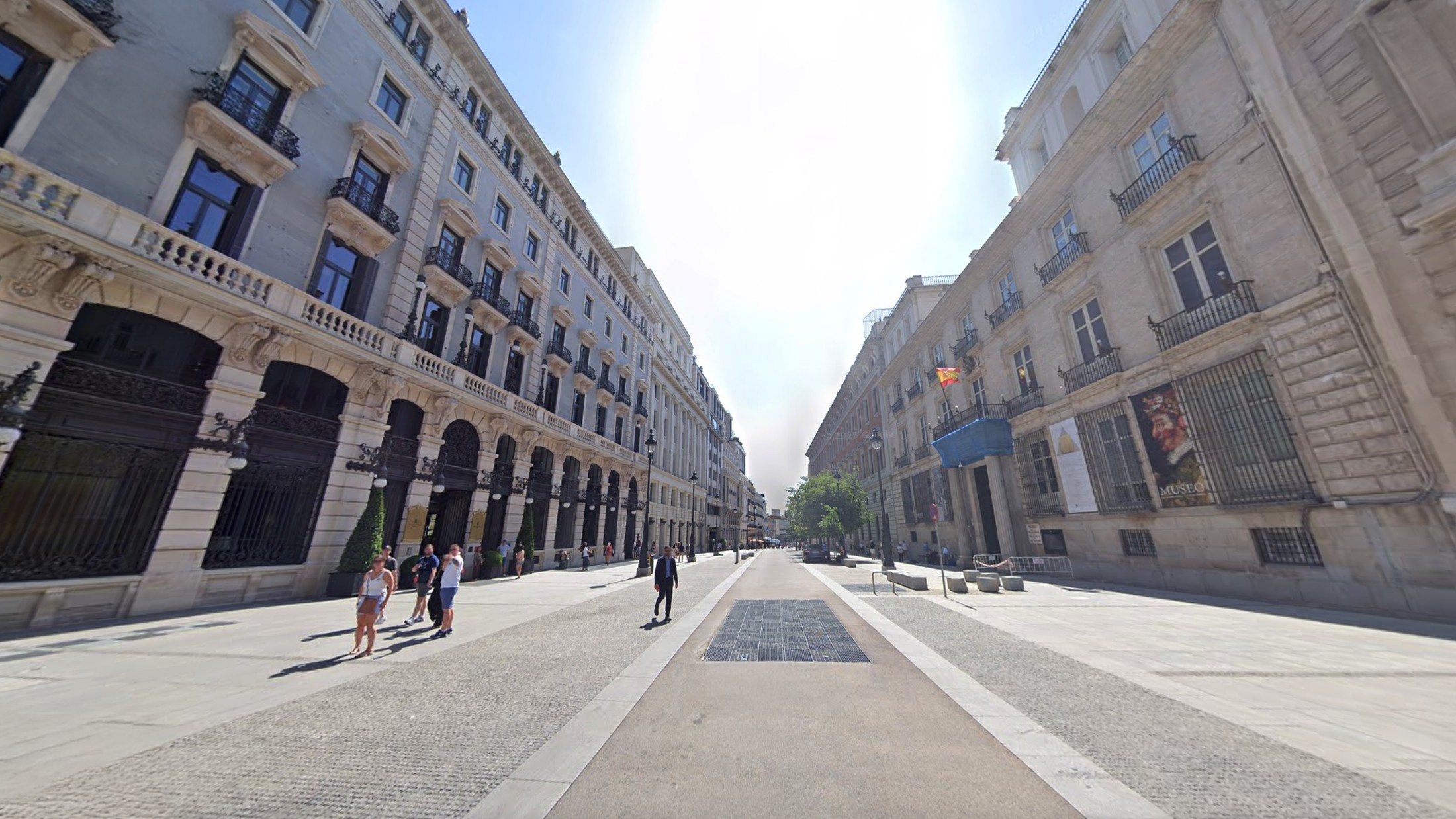
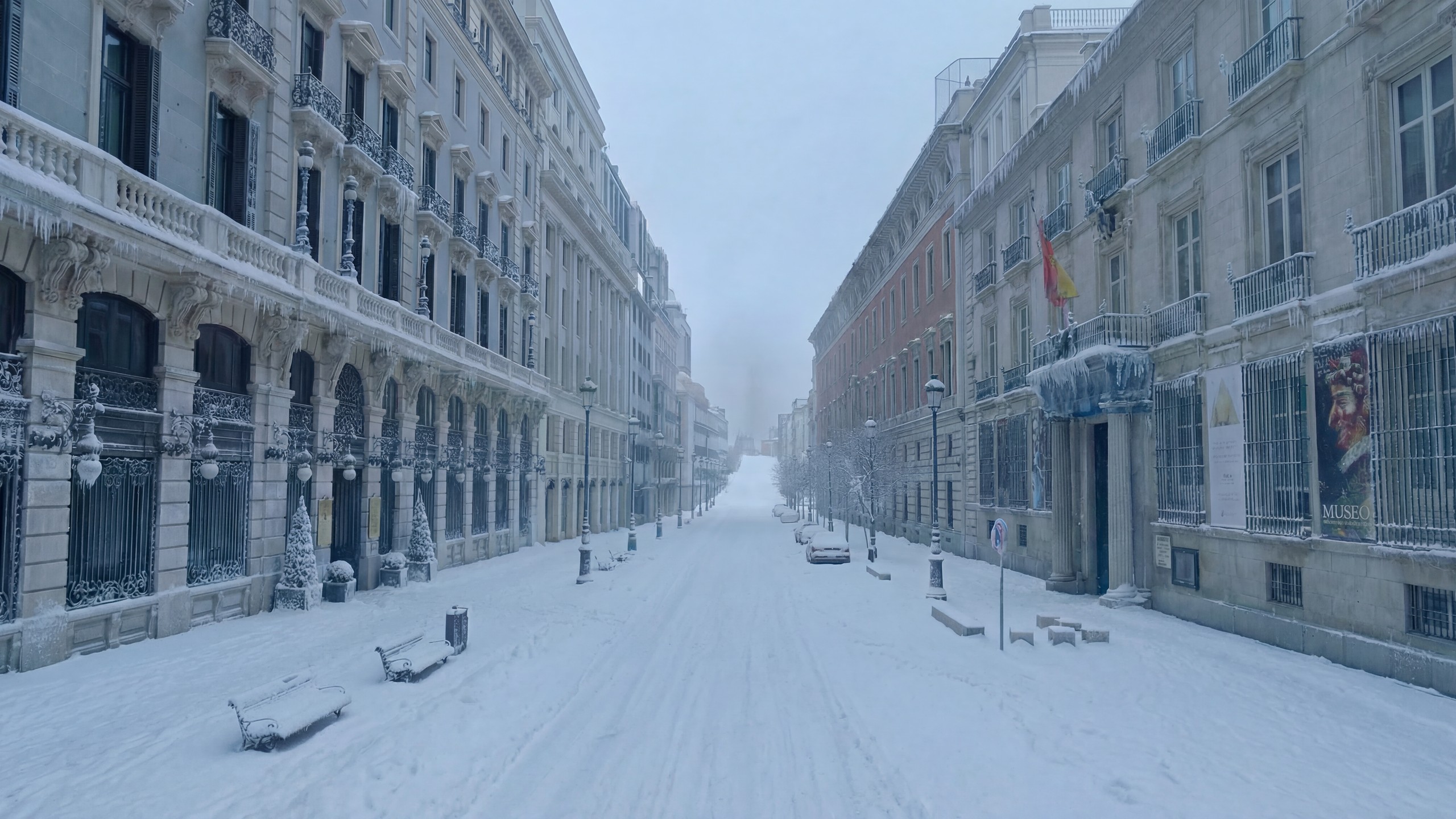
The snow is invented. The street is not. Every exterior starts from a capture of the actual road off Google Street View — the real building line, the real cornices, the real width of the pavement, at the real height of somebody walking down it.
That is the whole method, and in December 2025 it was the only one available. Ask a model for a snowed Madrid avenue and it will give you a plausible European street, and a different one in every shot: the balconies move, the arcade changes side, the tower at the end of the road disappears. Hand it the same photograph every time and the city stops drifting. The plate holds the sequence together, not the prompt.
So the prompts are written around the image rather than instead of it. Use this photograph as the street. Now bury it. Now put the camera somewhere else on the same street — down the avenue, up it, straight down from a drone, low and travelling beside a pair of skis — and keep the buildings where they are.
The two frames below are the same stretch of street. Left, the road as it is: the arcade running along the left side, the flag on its pole, the exhibition poster on the wall opposite. Right, the same road under a metre of snow, with every one of those still where it was.
What the model is allowed to invent is the weather. Everything else it has to copy.
The cast
The couple in the ski suits
These two are characters in the film, and they were filmed for real: the production dressed a corner by the gate with snow and shot them there, on skis, in the wardrobe they wear inside the restaurant. Those frames are what arrived with the brief.
So the exteriors are not free. Whatever gets generated down the avenue has to give back the same two people: her pale pink puffer suit with the fur-trimmed hood and the mirrored goggles, his brown ski jacket and trousers, black gloves on both, the dark sunglasses, the grey hair. The wardrobe is the continuity — it is what tells you the wide shot and the close shot are the same afternoon.
In December 2025 that was the hard part. A model handed a photograph of two people will return two people who resemble them, and resemble them slightly differently in every shot. The reference goes in with every prompt, on every camera position — the low tracking shot beside the skis, the drone straight down, the wide of the empty avenue — and each frame gets checked against it before it moves.
Left, the reference as it was filmed. Right, the generated shot: same faces, same suits, same gloves, a street that was never under snow.
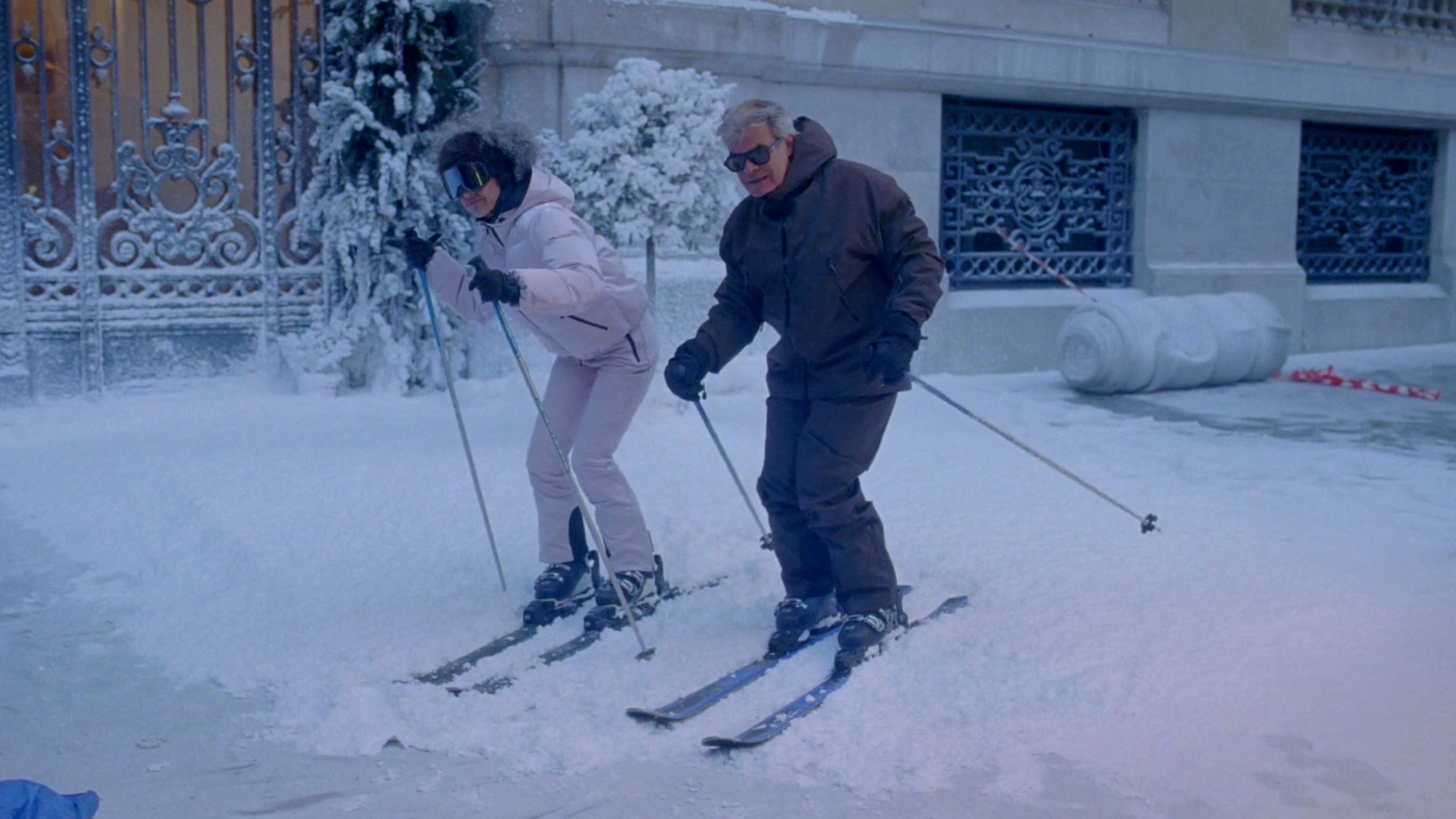
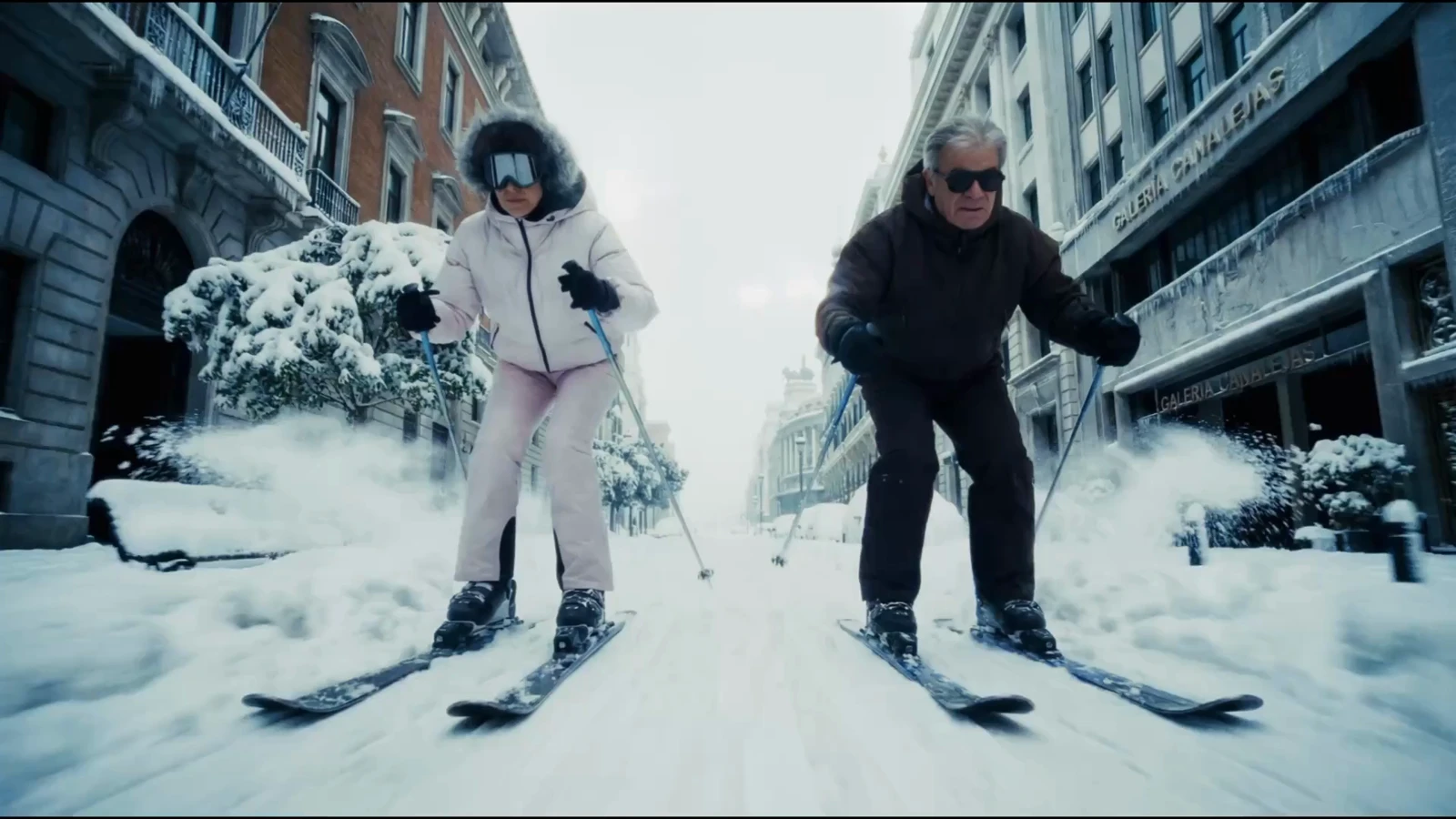
The wardrobe is the continuity. Reference frame supplied by the production, reproduced here as reference only.
The shots
The exteriors
Sixty-five generated frames in the working folder, twenty-one kept, eighteen clips cut from them. Three of the exteriors are below, at the size they were finished at: the drone straight down the avenue, the wide of the street, and the rooftops. They have to agree with each other across cuts — the same snow depth, the same flat winter light, the same city.
Upscaling was a separate pass, because the frames came back too small for a cinema screen and the grain had to survive being enlarged.
The sequence lands about seven minutes into the film, when somebody looks out of the restaurant window.
A drone straight down the avenue, two tracks in the snow
Le Dîner
The credit
Sixteen minutes in, under VFX and above graphic design, the roll reads: AI Production - Mito Films - Arantxa Barcia. The shot playing beside it is the drone looking down the avenue.
It is a small line in a long list, and that is the point. The generated part of this film sits in the credits next to the casting director and the film lab, which is where it belongs — one department among the others, on a piece nobody would describe as an AI film.