LE FLEUR EXPRESS
Concept campaign · A train through sunflowers
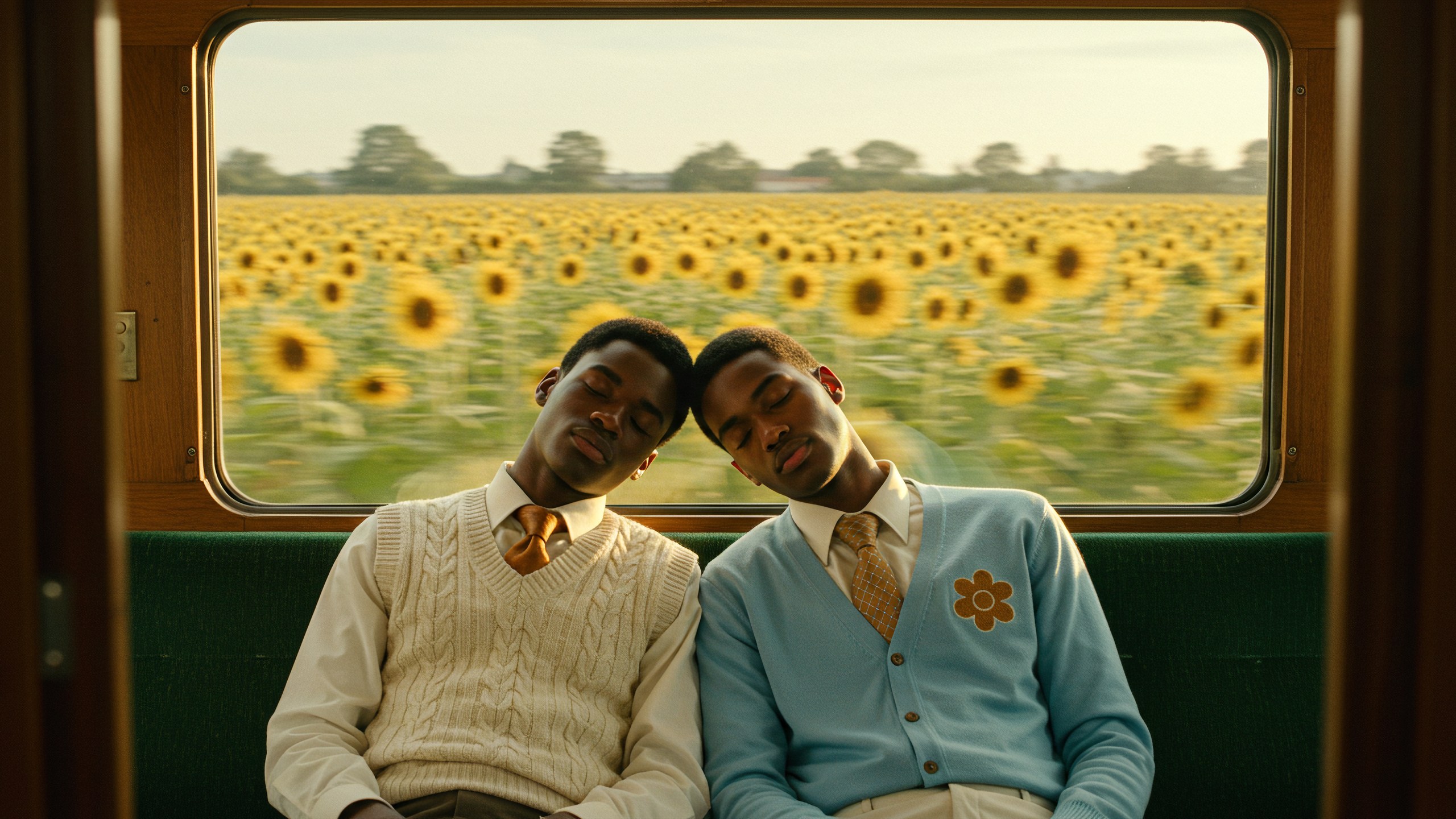
The first film made this way, in the last week of March 2025: Golf le Fleur as a train crossing a sunflower field.
Seven hundred and twelve generated images across five days, assembled in browser tabs ten months before the tool existed.
- Media:
- Film
- Type:
- Commercial
- Published:
- MAR 2025
View more +View less −
- Models
- Kling
- Tools
- Google ImageFX
- ComfyUI
The process
How it was made
Golf le Fleur never asked for this. It is a campaign for a brand that exists, written and made in the last week of March 2025, and it is the first film made this way here — the one that came before everything else.
The world was not invented, it was borrowed. The sunflower field is Flower Boy. The train, the luggage and the tailoring belong to Call Me If You Get Lost; the project folder is still named after it. Everything built on top — the carriage, the enamel signage, the plates, the typewriter — only had to sit between those two records without contradicting either.
Every shot was written out in full before anything was generated. A 1970s European train photographed frontally and symmetrically in Wes Anderson's grammar. A deep focal length with the vanishing point of the corridor lined up behind the character. Thirty-five millimetre grain, golden-hour light, a pastel palette. The document names its own references — the corridors of The Darjeeling Limited, Jamie Hawkesworth's portrait symmetry, Golf le Fleur's own campaigns — and then describes the logo to the millimetre: five rounded petals, uneven in size and spacing, a small hollow circle slightly off-axis at the centre. That paragraph exists because it was the only way to get the same flower back twice.
None of it happened in one place. Google's ImageFX in one browser tab for the stills, Kling in another for the movement, and in between a ComfyUI graph running on this machine — nodes wired by hand, one image at a time. Then Photoshop, After Effects and Premiere to finish. Nothing spoke to anything else, and nothing remembered anything.
The volume
Seven hundred and twelve images
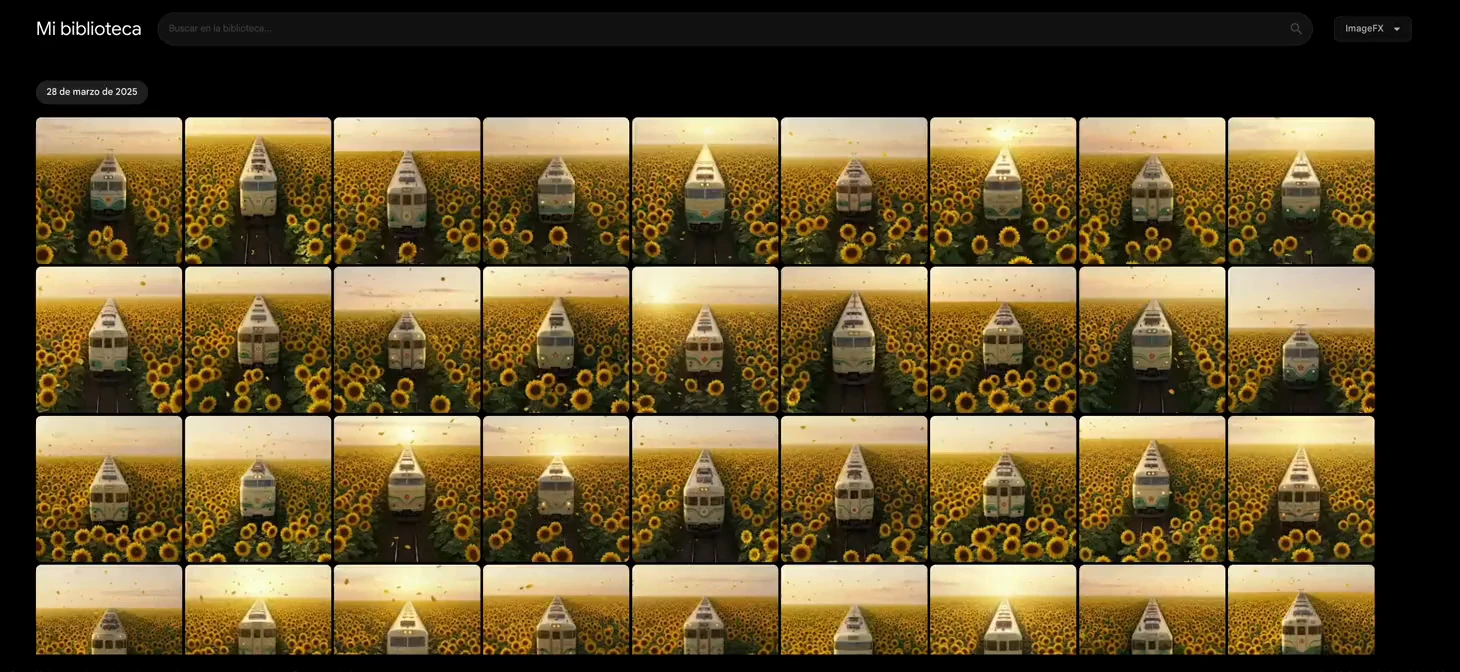
Between 24 and 28 March 2025, ImageFX produced 712 images for this film. Fifty-five on the first day, then 154, then 157, then 220, then 69. A hundred and twenty-eight of them were worth pushing through the upscaler. The film is sixty seconds long.
This is what that looks like from the inside: a library, scrolled, of a single shot. The train crossing the field, over and over, until the sun sat where it needed to sit and the carriage stopped changing shape between one frame and the next. There was no other way to get consistency out of a model with no memory of what it had just made.
The graph
Four times, by hand
ImageFX gave back 1408 by 768 pixels. By the standards of anything you would put on a screen that is a thumbnail, and it was all the model would produce.
So the second half of the process was a ComfyUI graph, built node by node and run locally on one image at a time: load it, cut it into tiles, push each tile through the upscaling model, denoise it far enough to keep grain and not so far that it invents a new face, stitch the tiles back, save. Out the other end, 5632 by 3072 — four times up in both directions. A hundred and twenty-eight images went through it, and those are the only ones that made the film.
Drag the handle. On the left is what the model handed over. On the right is what survived the second pass — sharper, and twice with the brand's own name finally spelled right.
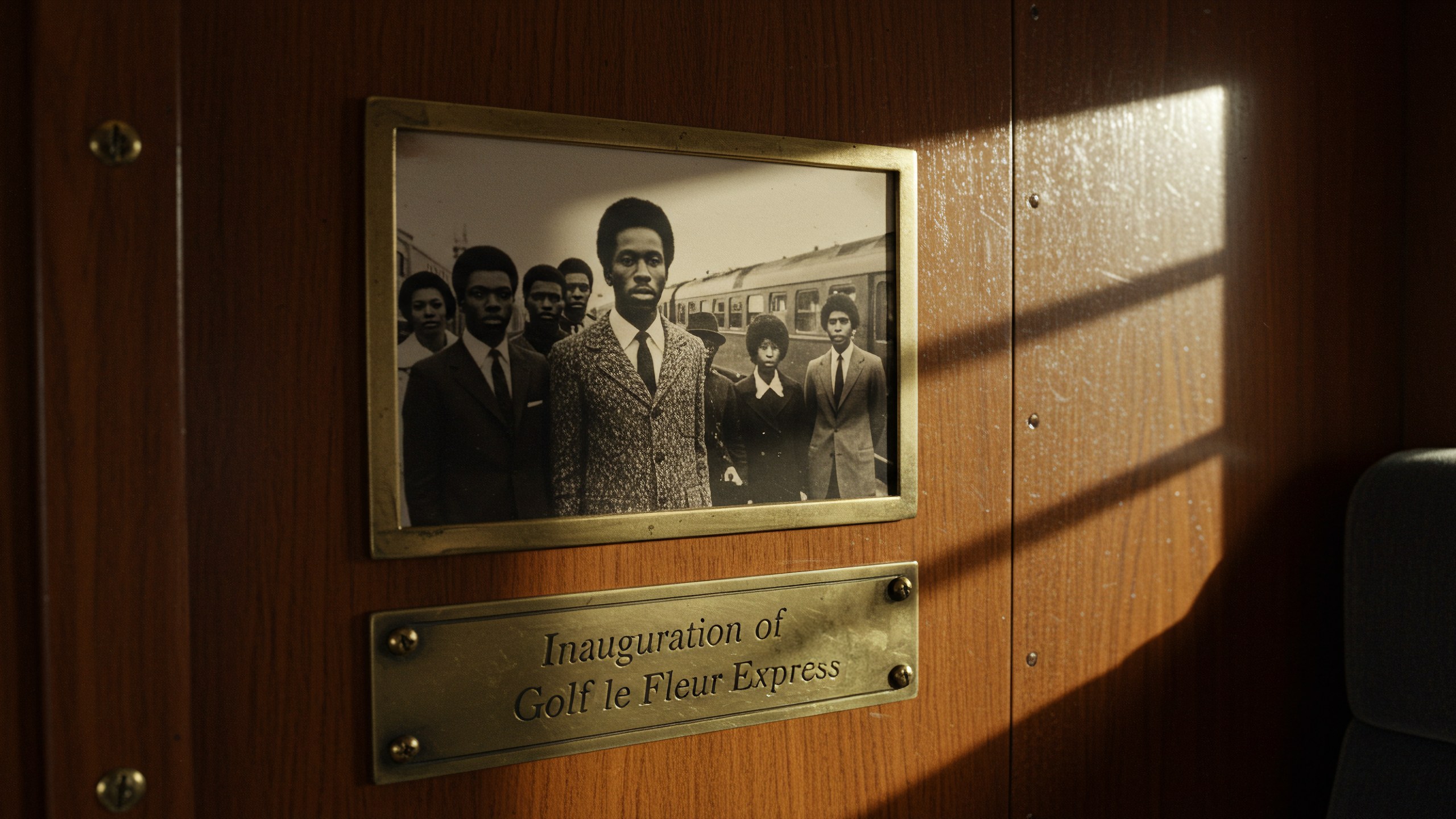
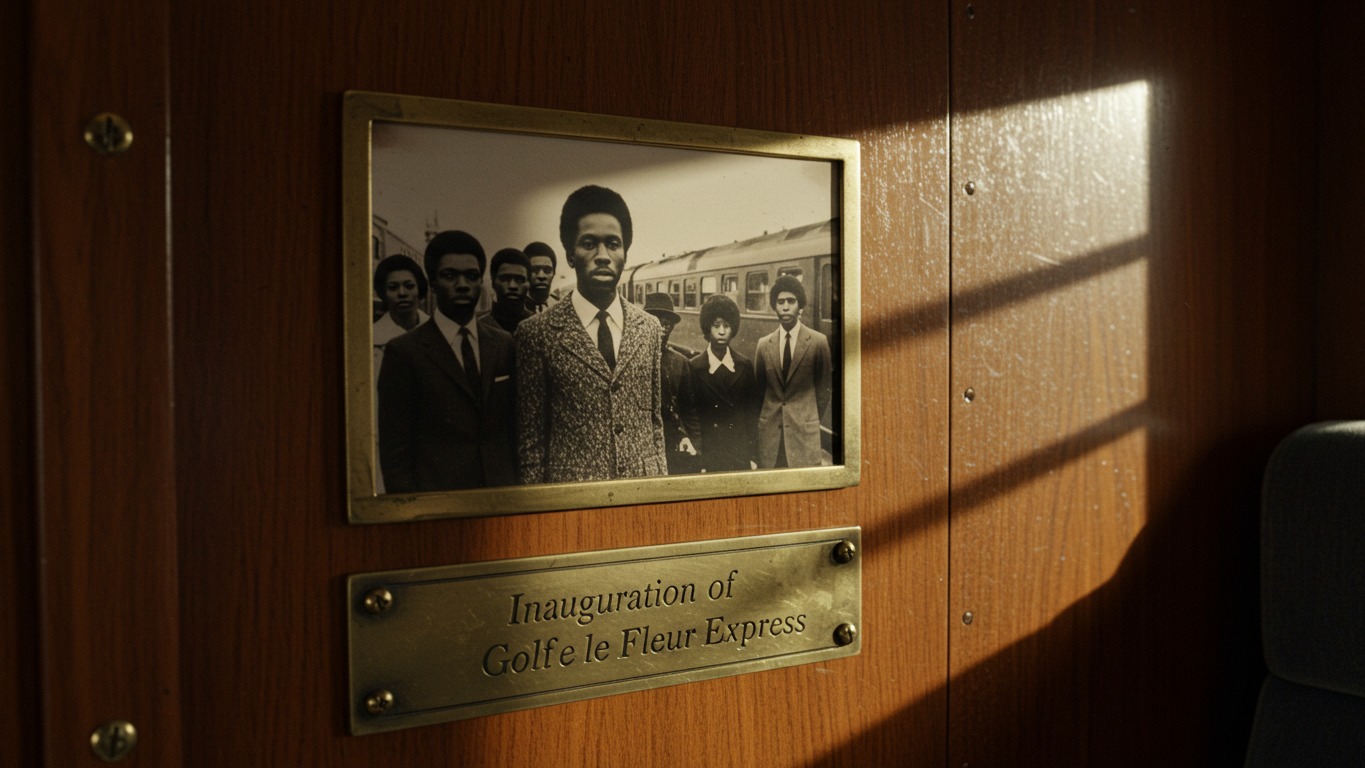
The model welded an e onto GOLF. Knocking it off took another pass
The stills
The world
Nine of the finished frames, at the size they were finished at. Each one is a single still that had to be right on its own before anything moved.
The driver, the field ahead, and the symmetry everything else was written against
The research
What we looked at
Two records and a train. Flower Boy gave the field. Call Me If You Get Lost gave the journey, the luggage and the tailoring. Between them sat one photograph of a 1970s carriage from Accidentally Wes Anderson that fixed the interior — the seat fabric, the ceiling, the repeating windows — before a single prompt was written.
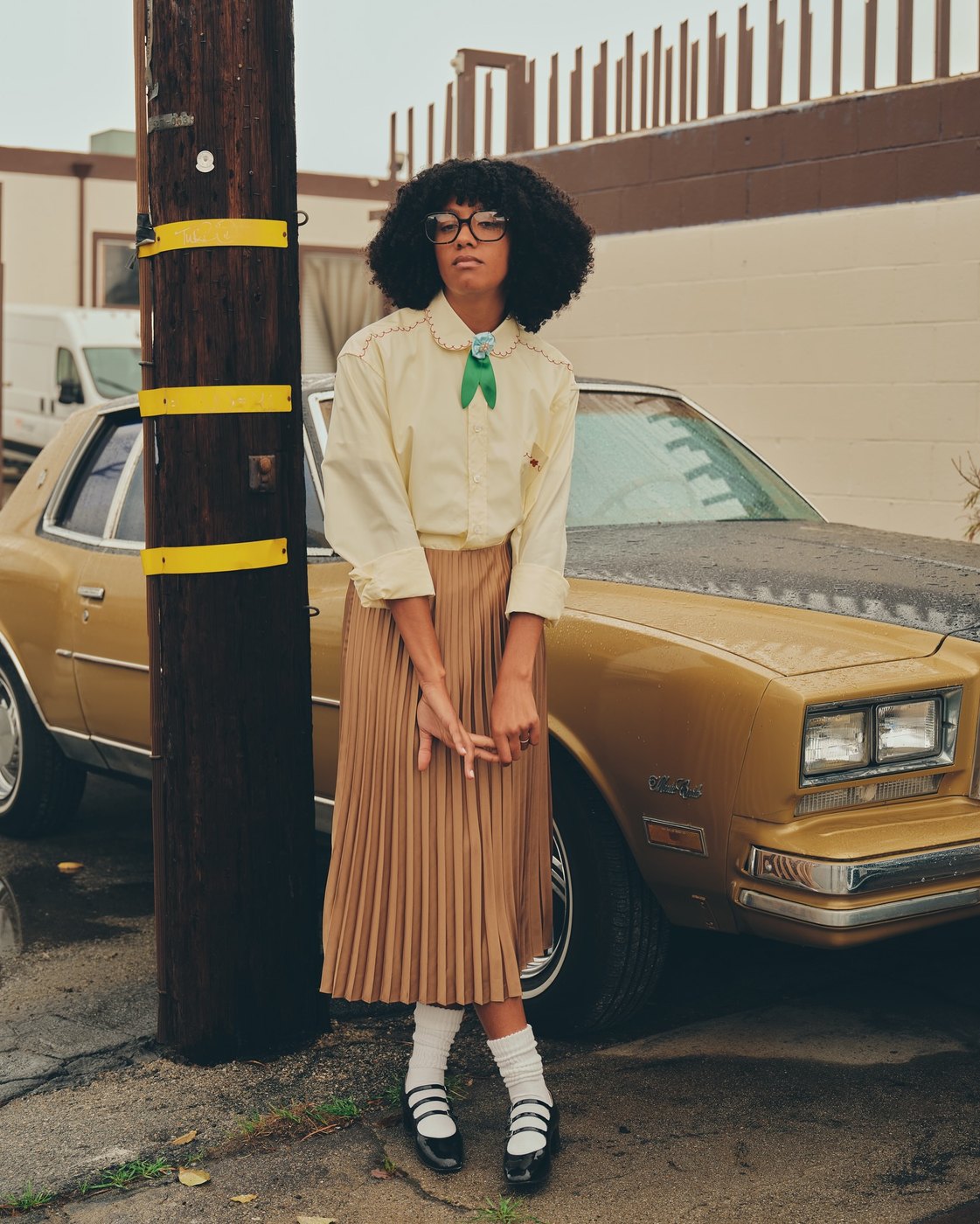
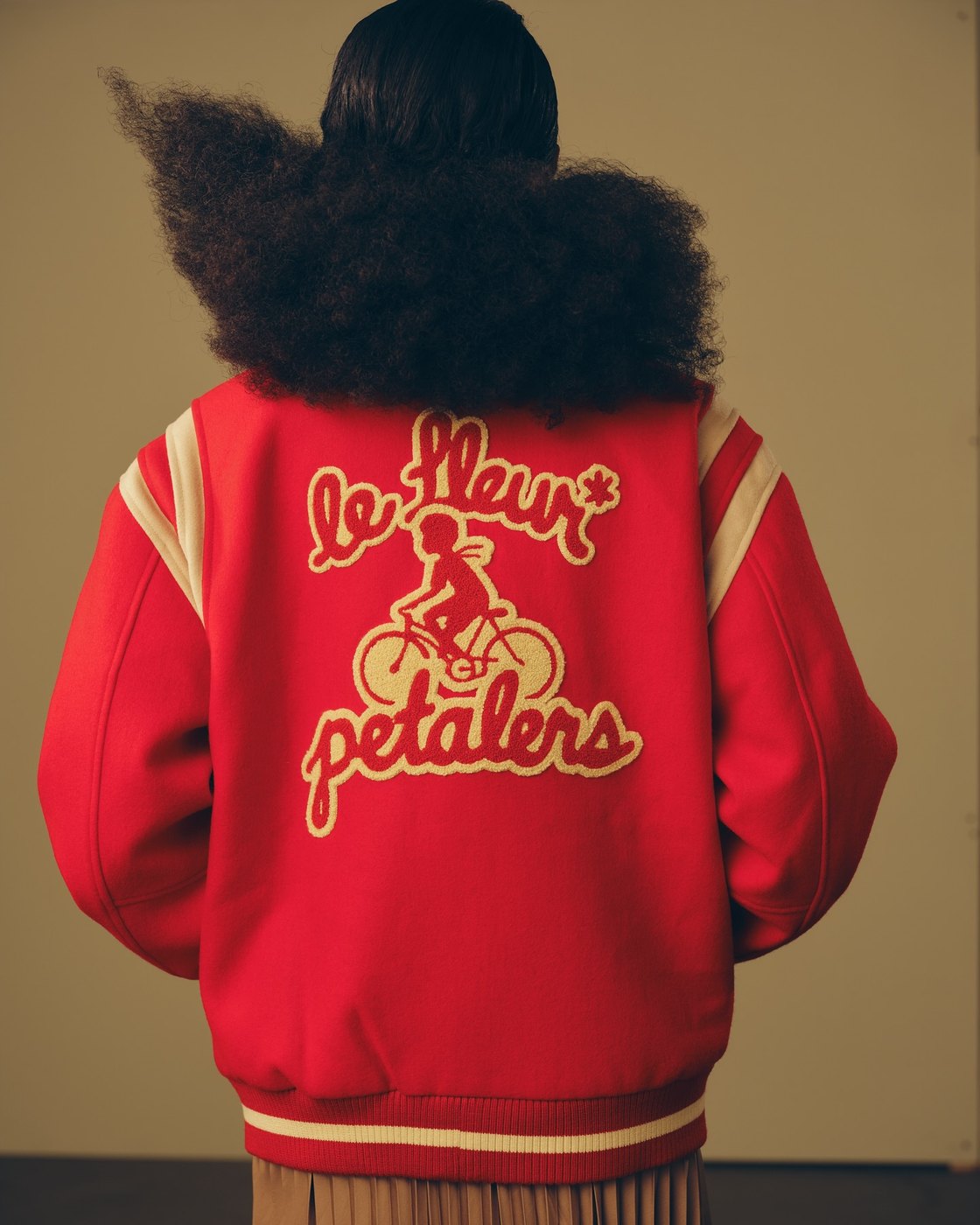
Everything else came from the brand's own material: three seasons of Golf le Fleur campaign photography, the varsity jackets and the scalloped collars, and the five-petal flower drawn at the proportions it is actually drawn at. The wardrobe in the film is close to it and is not it, which is the one thing this era could not do.
References
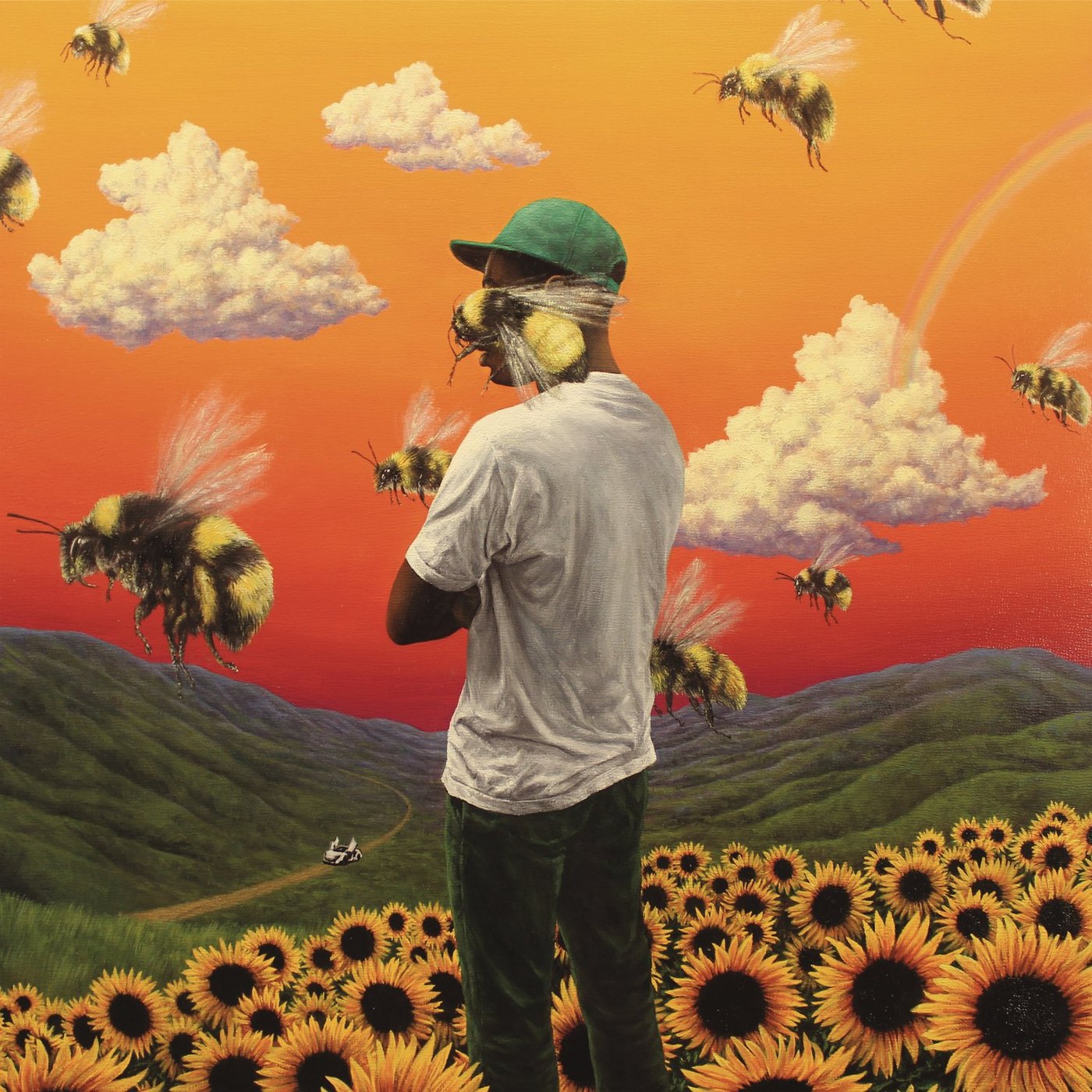
Reference 01
The field: Flower Boy
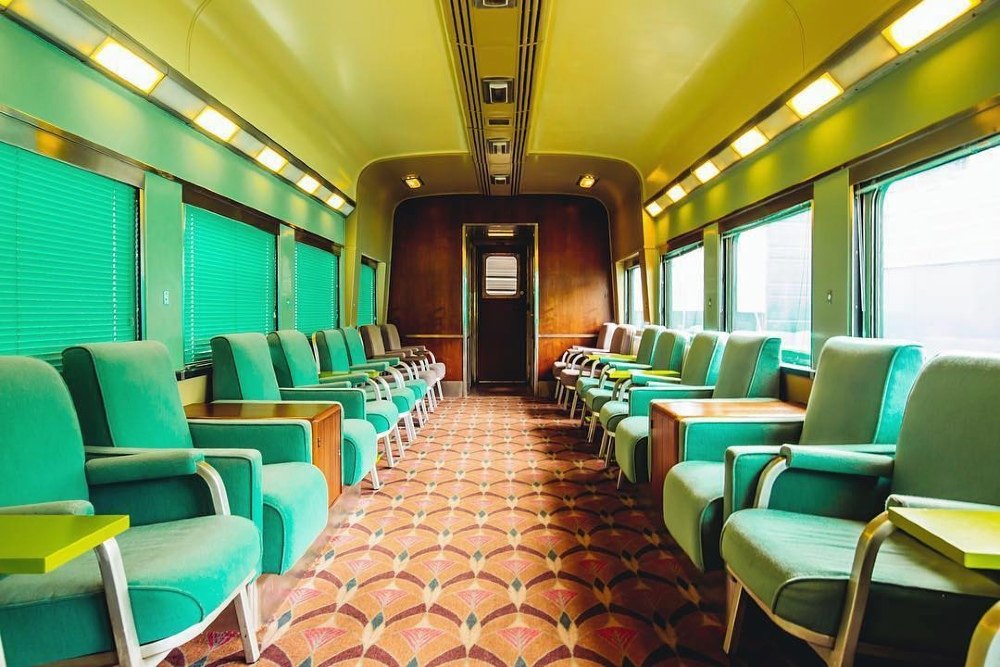
Reference 02
The carriage, from Accidentally Wes Anderson
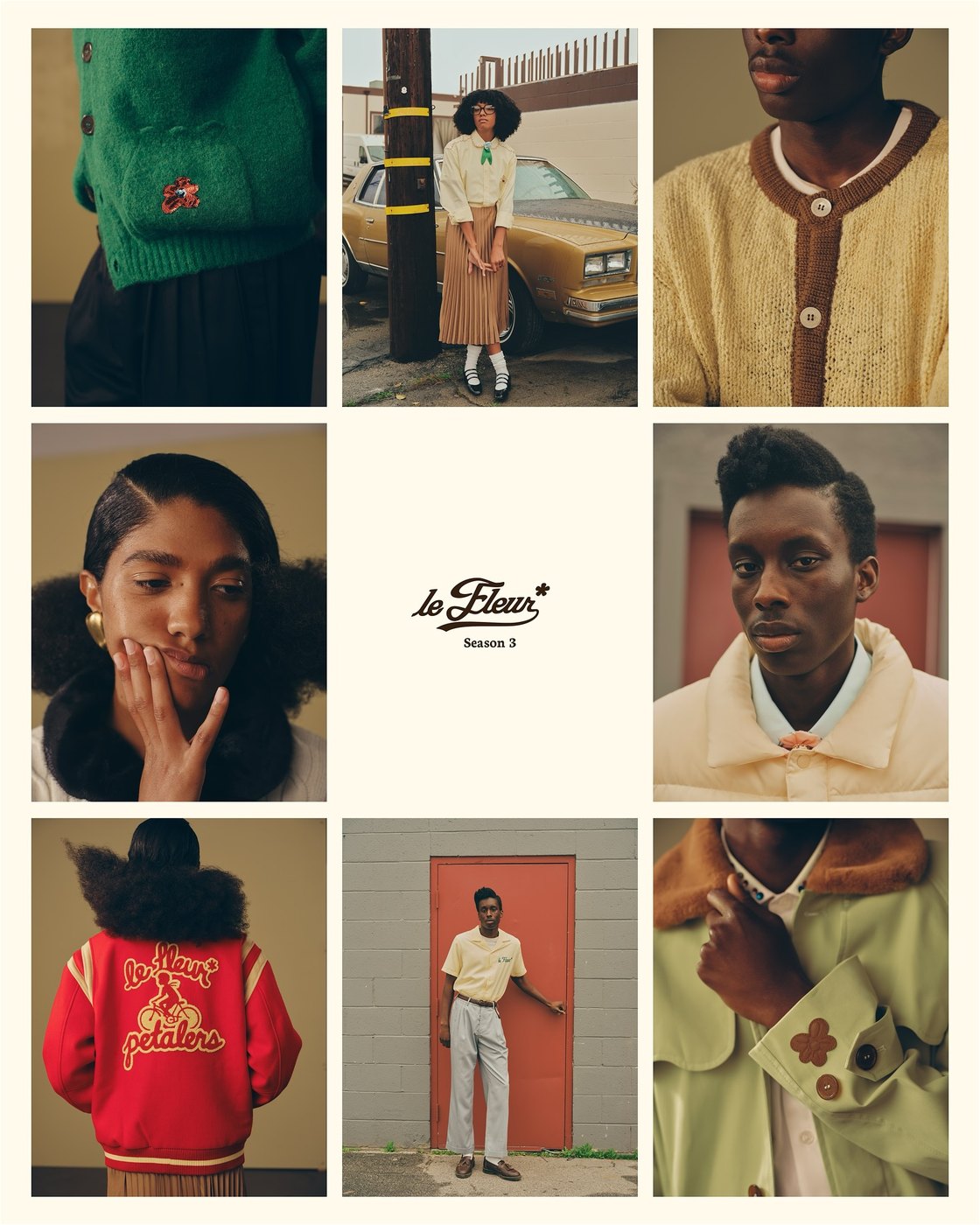
Reference 03
A season of Golf le Fleur, as a contact sheet
Reference 04
The collar, the pleats, the socks
Reference 05
Chain stitch, and how the brand writes its own name
Reference 06
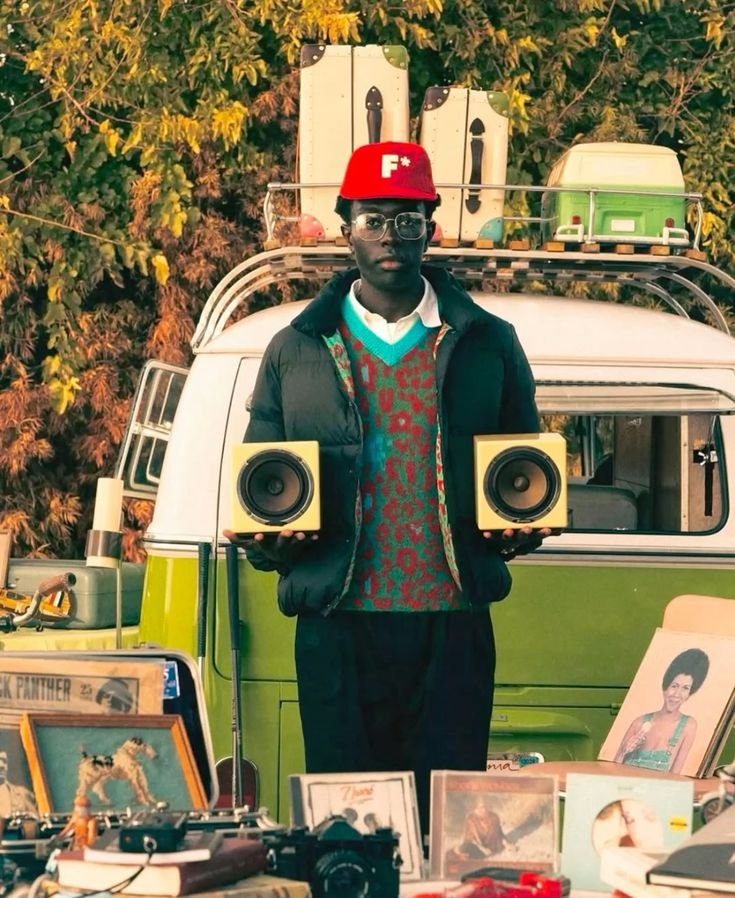
How the brand stages its own objects
Reference 07
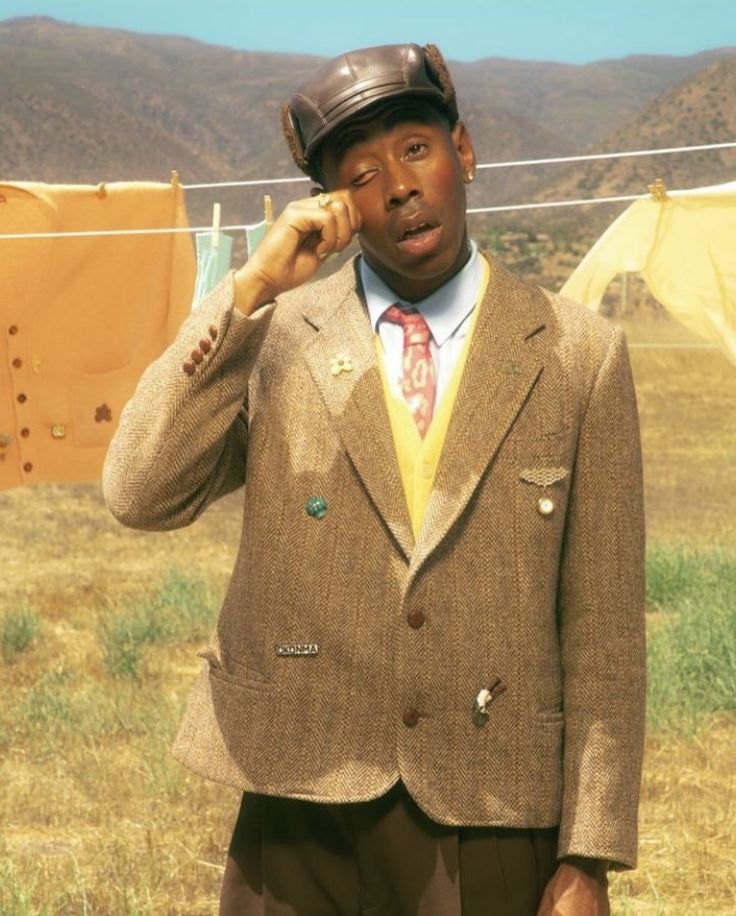
The tailoring: Call Me If You Get Lost

Reference 08
Five petals, uneven, hollow off-centre
Then and now
March 2025
It is worth being exact about what did not exist yet. There was no MITO platform; that arrived ten months later. Seedance had not shipped. Nano Banana had not shipped. There was no model you could hand a photograph of a jacket to and get the same jacket back on a different body, in different light. Consistency was manual: describe the garment in words, generate until it matched, upscale the ones that did in a graph you had wired yourself, and write the whole thing again for the next shot.
That is why the wardrobe on this train is not Golf le Fleur's actual wardrobe. It is built around the brand rather than taken from it, because a real garment could not yet be asked for by reference and returned intact. Maritime, six months later, is the same exercise run again once it could.
The limit left its own discipline behind. A film cut from images that each had to be right on their own, with nothing to generate around a problem, gets written more carefully than one made where a fix is cheap.