LA ROJA
Campaign film · Before the World Cup
Batido, a two-minute film for Movistar before the 2026 World Cup.
The brief asked for the opposite of what everyone else asks for: a film where the AI is meant to be visible. Faces the whole country knows, inside images that could not have been shot.
- Client
- Movistar
- Media:
- Image
- Type:
- Commercial
- Published:
- MAY 2026
Credits
Agency — Oriol Villar. Production — Roma. AI production — MITO AI.
View more +View less −
- Models
- Kling
- Nano Banana
- Seedance
- Grok
- Tools
- MITO AI
The brief
They wanted to see it
Batido is a two-minute film for Movistar, made for the 2026 World Cup and released on 25 May 2026, an hour before Luis de la Fuente read out the squad. The idea and the script came from Oriol Villar, Roma produced it, and MITO made the part of it that is generated. It ran on television, in cinemas, outdoors, in press and online.
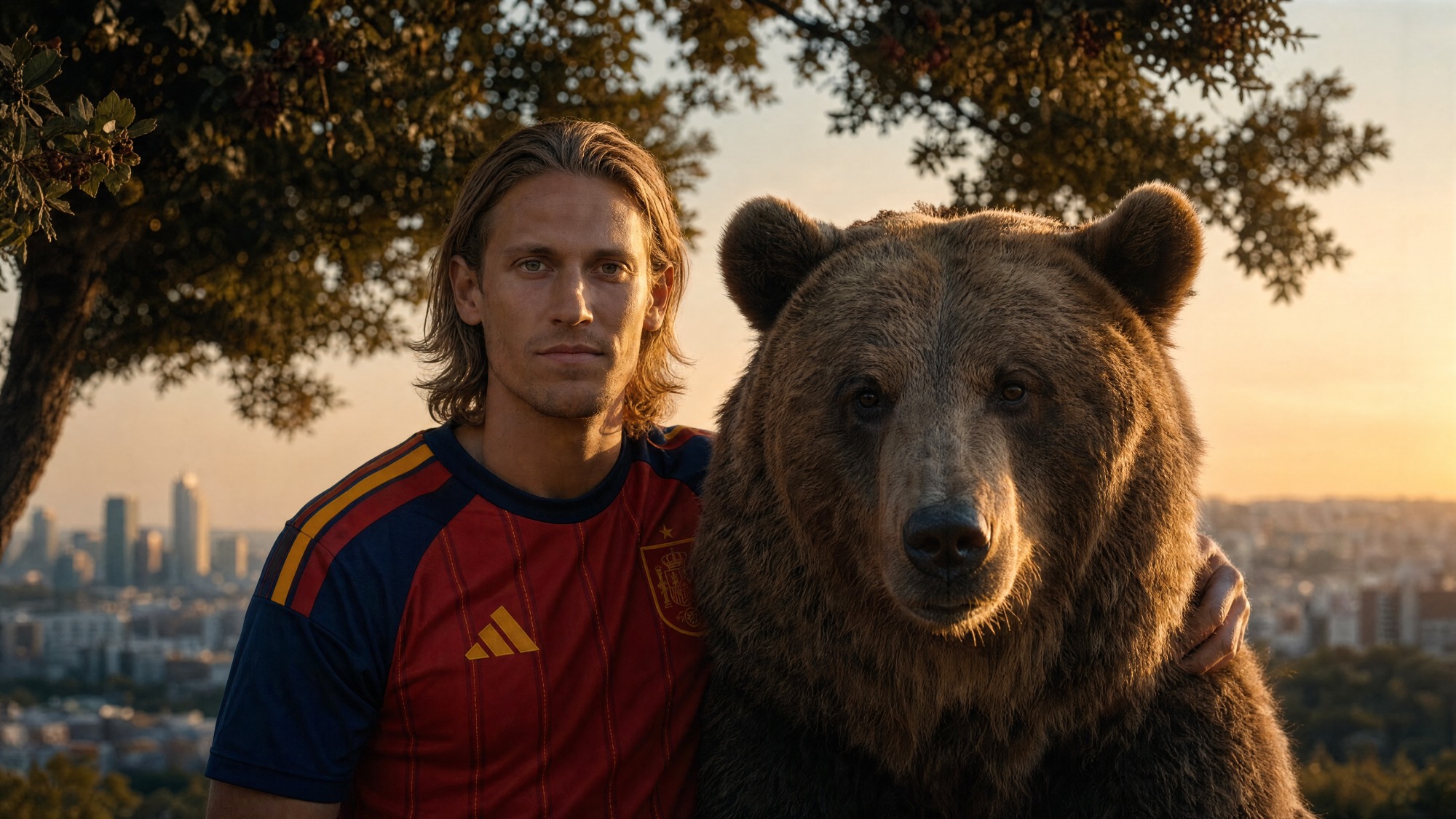
The brief carried one instruction that reverses what everyone else asks for. In the meeting they said, plainly, that they could never tell when something had been made with AI — and that this was exactly what they wanted to see. Not a film that hides it. A film where the impossible is legible as impossible: a player hauling on a rope under Tower Bridge, another one standing beside a brown bear above Barcelona, a chef pouring molten light out of a pan in his own kitchen.
So the work is not disguise. It is deciding how far a shot can go before the emotion in it stops being trusted, and then stopping one step earlier. Every impossible image in this film sits on top of a face that has to remain completely, boringly real.
The campaign is named after a mistake. In the script the coach says that when the national team plays we are all in the same heartbeat — el mismo latido. He says el mismo batido: the same smoothie. On screen a teenager rewrites the prompt to correct him. They kept the slip and named the campaign after it.
And along the bottom of the frame, for the whole two minutes, runs a line: produced with the excitement and hard work of a team of more than a hundred human beings, using an AI tool with purpose and respect. The disclosure is not in the credits. It is in the film.
The references
It starts with the real thing
Nothing here begins with a prompt. It begins with the real thing on the board — the press photograph of the player, the actual ball from España–Serbia on 27 March shot from four sides, the shirt itself, home and away, down to the España lettering stitched inside the collar.
Eight reference groups exist before a single frame is generated, because a world this recognisable has no tolerance at all. Everyone watching already knows what that face looks like, and what that ball looks like, and they know it instantly.
The finished project ran to 1,482 assets on one canvas: 660 images, 657 clips, 69 voice tracks and 36 documents, for 120 seconds of film.
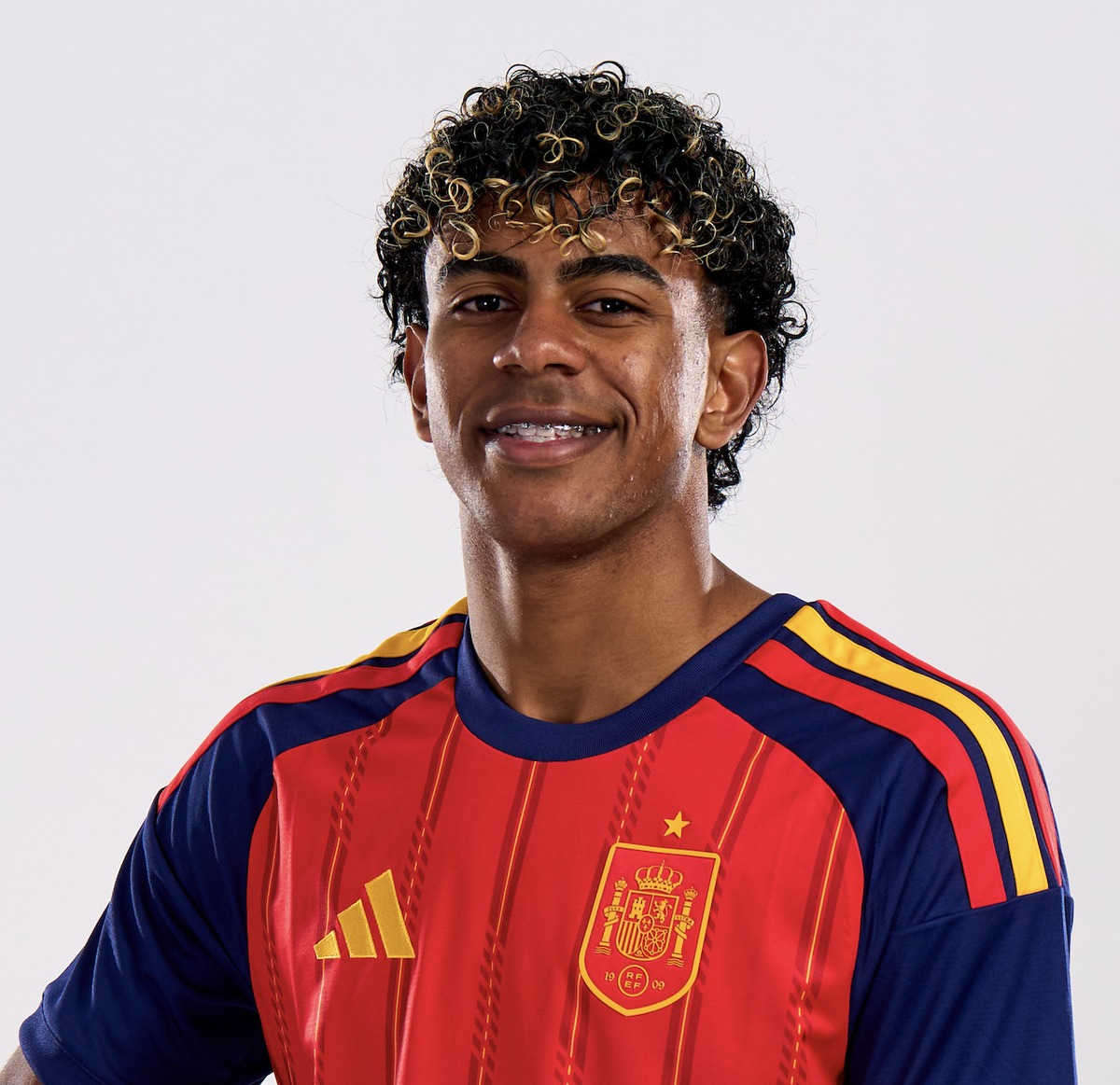
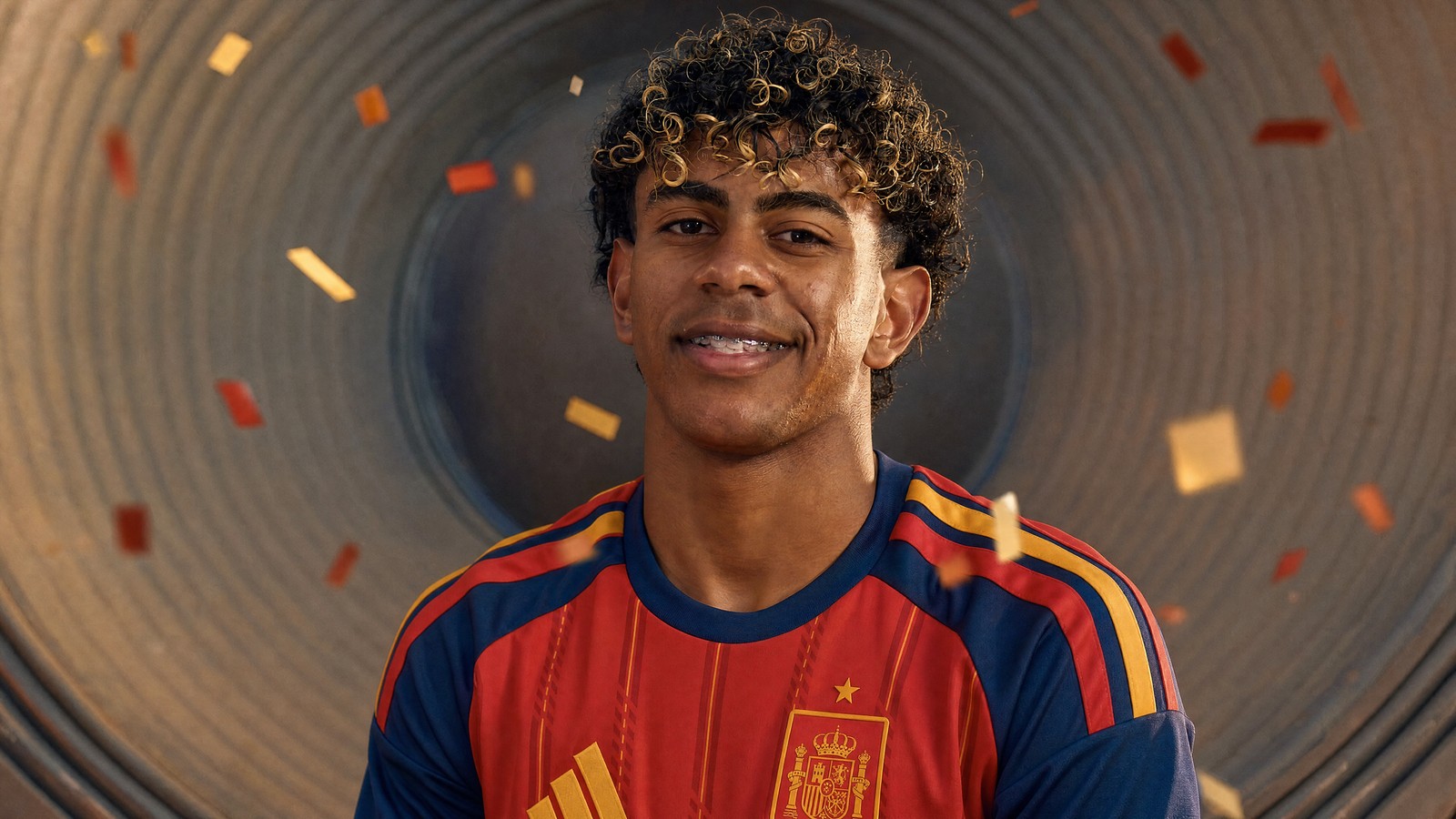
One photograph on the left, and on the right the same person somewhere he has never been. Everything between those two images is the work. The photograph is the official press image, reproduced here as reference only.
The cast
The faces
The hardest thing in this film is not the bear. It is that Lamine Yamal has to still be Lamine Yamal after you have put him inside the groove of a record, and that the face has to hold when the shot lasts two seconds and the next one is somewhere else entirely.
Movistar and Roma held the likeness rights. The work here was holding the likeness itself. Five frames pulled from the project's own generations rather than off a broadcast master, at the size they were made.
Standing in the groove of a record, at the size of the needle
The ending
The last shot
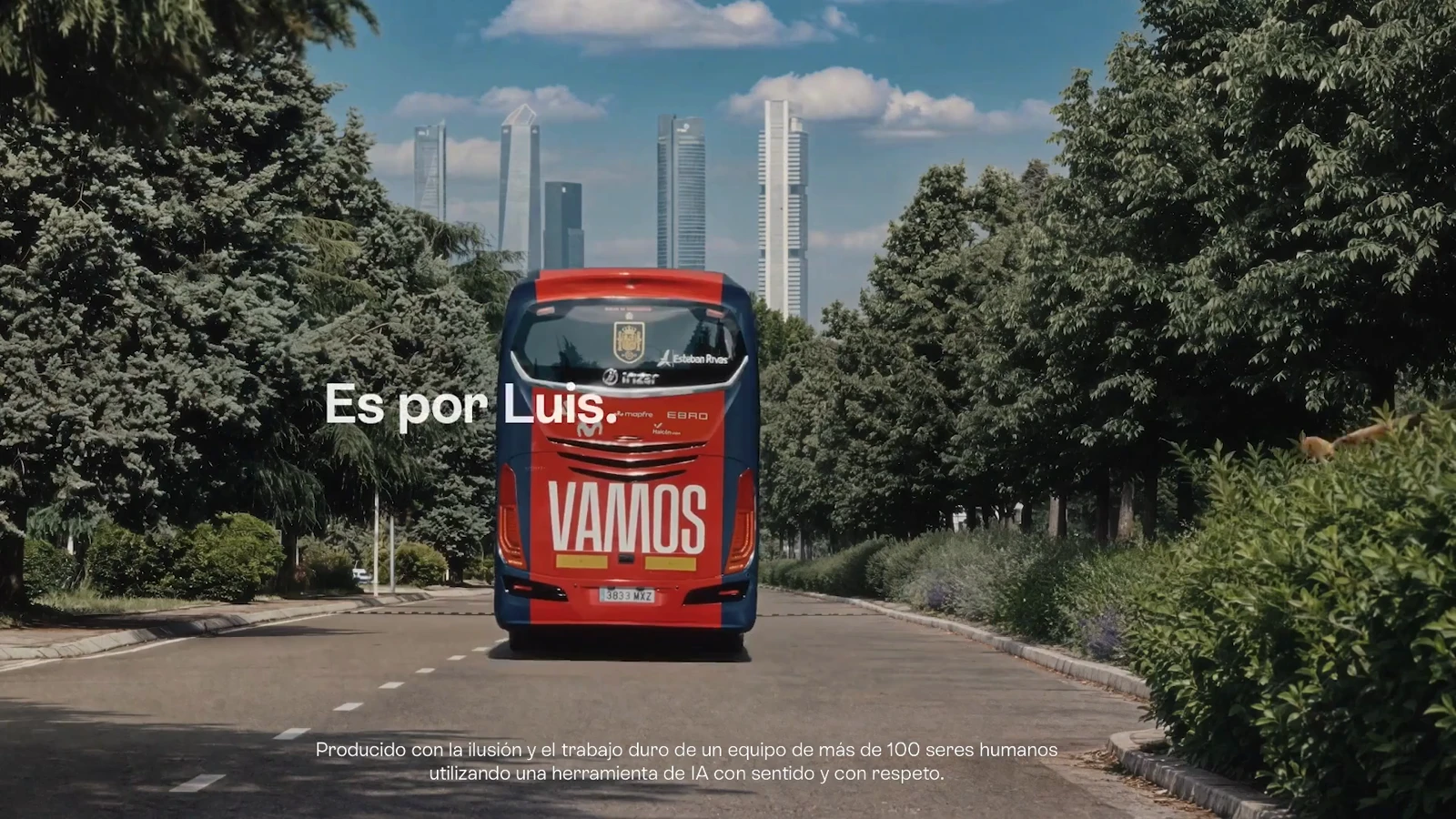
It ends on an avenue of plane trees in Madrid, with the four towers standing in the haze behind, the España bus going away down the middle of the road — and a brown bear crossing in front of it as though it had somewhere to be.
Nobody remarks on the bear. That is the whole joke, and it only works because everything under it is exact: the bus is the bus, the skyline is the skyline, the light is six in the evening in May. The one impossible thing in frame is allowed to be impossible because nothing else is.