DELLAFUENTE
Anniversary film · Azulejos de Corales
Granada reinterpreted through light, geometry and emotion — the Alhambra not as a monument but as a living postcard, where stone and shadow become memory.
- Client
- Dellafuente · Aparell
- Media:
- Film
- Type:
- Commercial
- Published:
- October 2025
Credits
Direction and creation — Arantxa Barcia. Produced with MITO Films.
View more +View less −
- Models
- Kling
- Nano Banana
- Seedance
- Grok
- Tools
- MITO AI
The process
How it was made
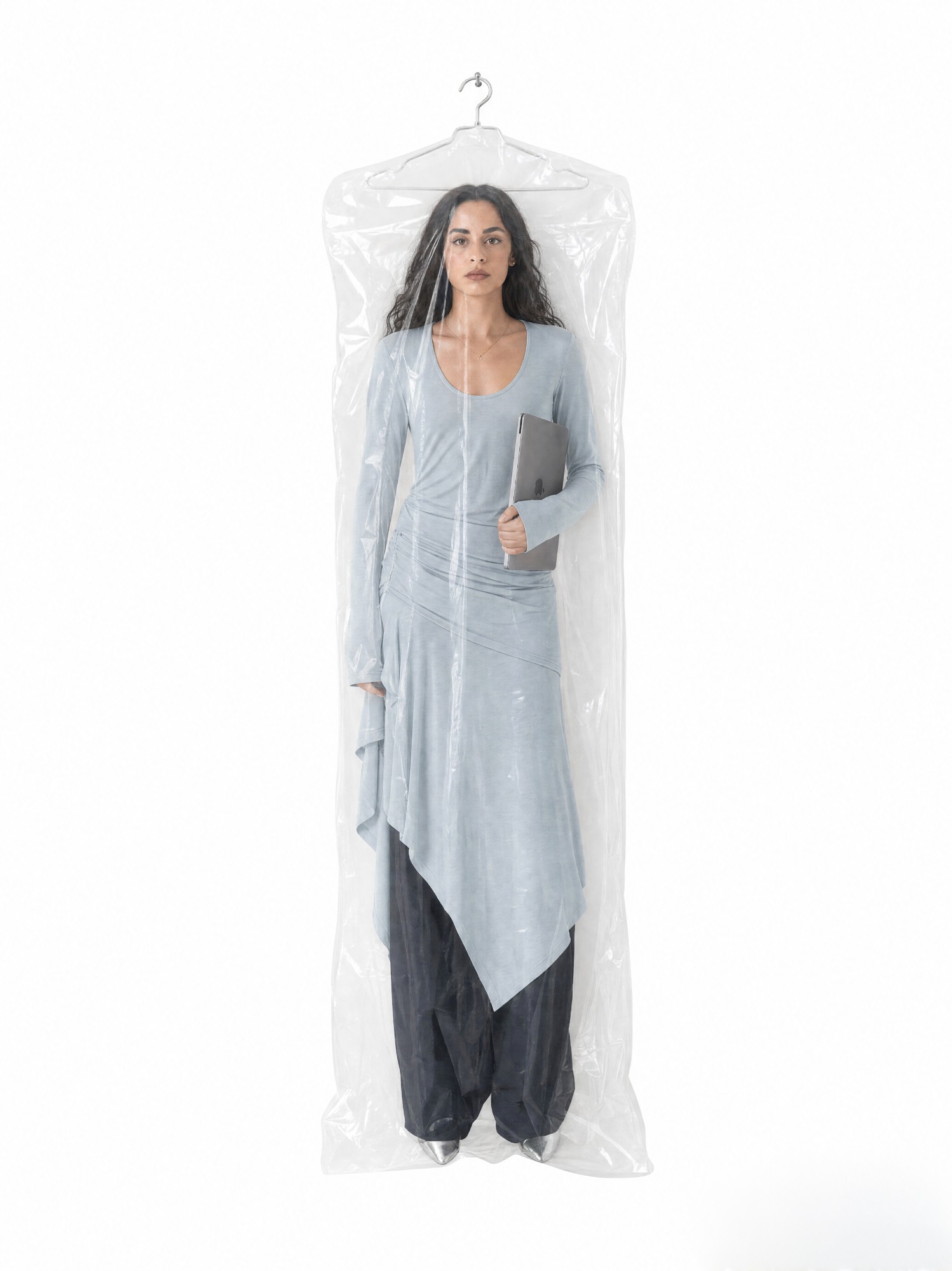
The brief arrived on LinkedIn: ten years of Azulejos de Corales, a merch drop to reopen the record's visual life, complete creative freedom and a tight deadline. Three T-shirts, a hoodie, a blanket, earrings, plates, small objects and a new vinyl edition, brought together in one film.
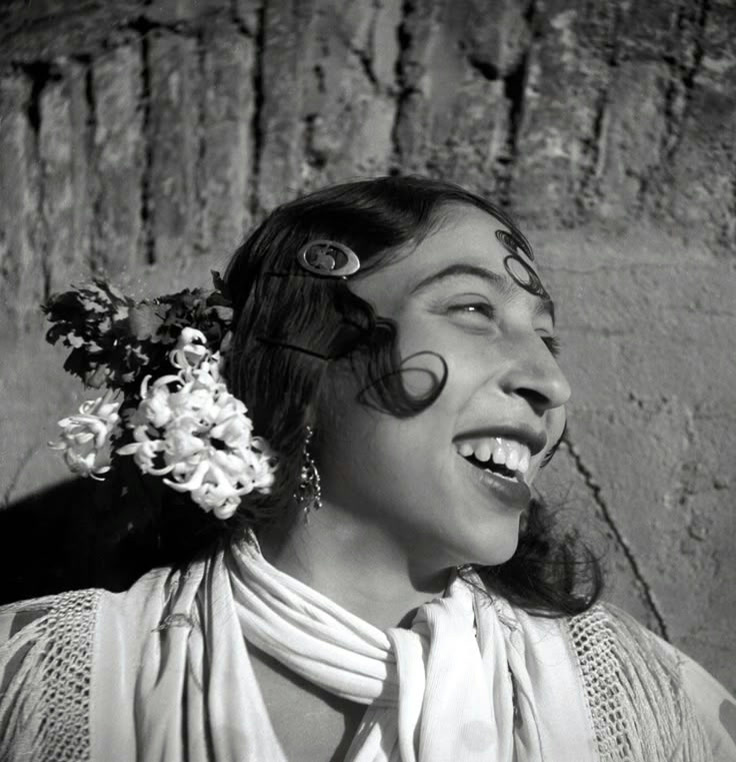
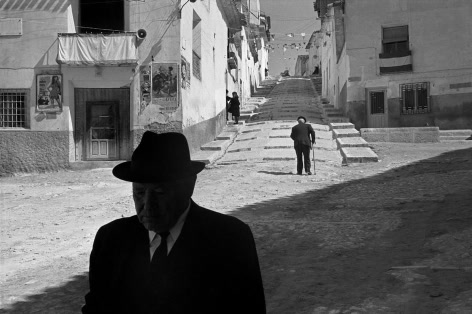
Research began with Dellafuente's Granada: tradition and restrained electronics, family and neighbourhood, Nazari geometry, stars and lunar signs. Photographs by Cristina Garcia Rodero and Pierre Verger sat beside our generated stills in a moodboard used to test the world before production. The Alhambra became its rule system, governing gesture, light, proportion and materials. Every decision faced one question: does this belong to the patio?
We wrote the film as timed beats: action, place, cast and the exact product in each frame. Every object had a role and a hero moment before generation began. Camera range, light logic, grain density and material behaviour formed a visual bible against which every variant was judged. Consistency came from this process, rather than late corrections.
Black and white gives present-day gestures archival weight. The camera stays composed, moving only when intention calls for it. Stone measures, fabric shelters, tile marks and metal reflects. Repetition creates permanence; slight variations make the world feel lived in.
The collection
Every piece, twice
Nothing in the drop was designed twice. It all came out of one square — the vinyl cover — and then had to exist in two places at once: inside the world, doing a job in a frame, and alone on white, where nothing carries it but the drawing. The same artwork had to survive being printed on cotton, pressed into metal, fired onto ceramic and woven into a blanket, and still read as the same thing at every size.
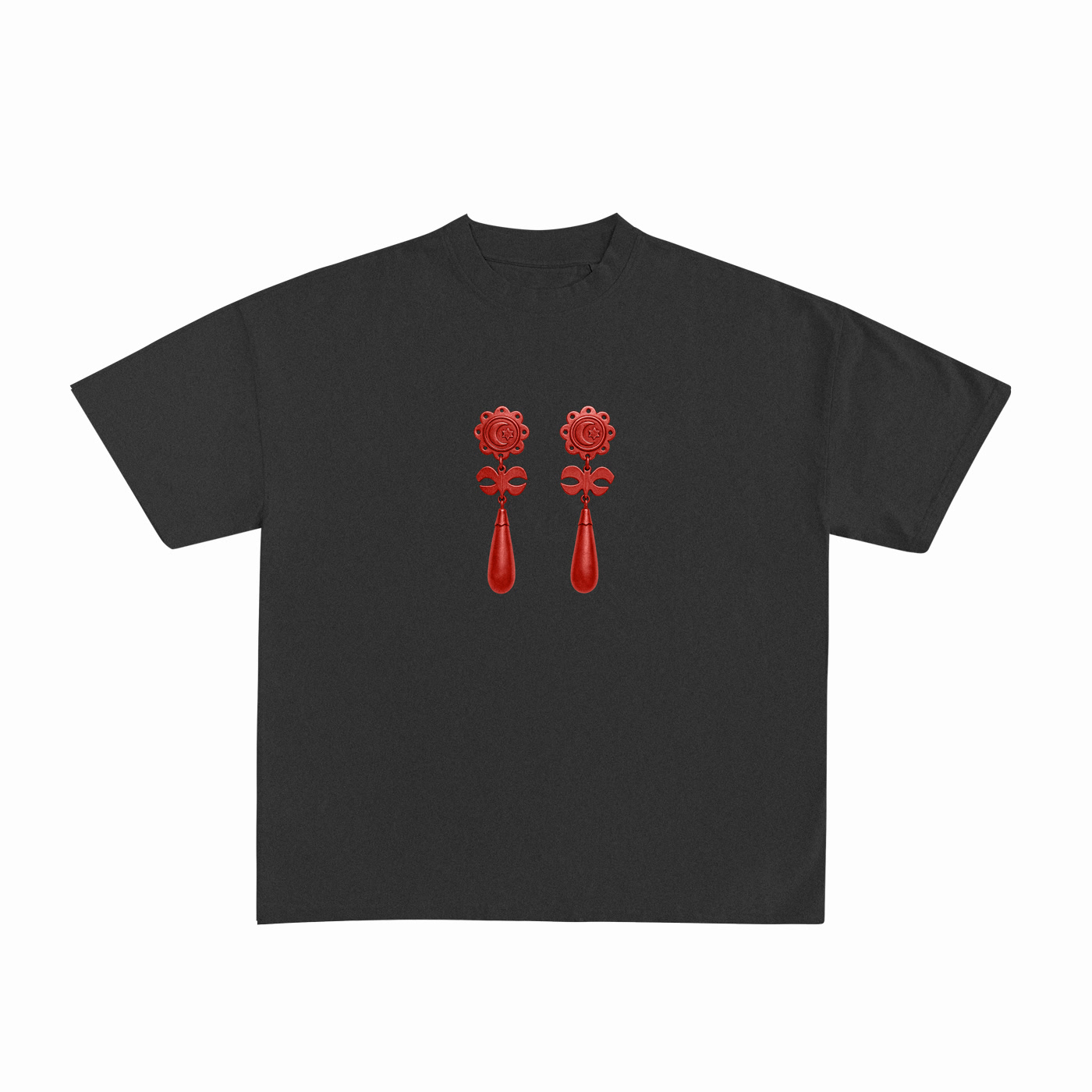
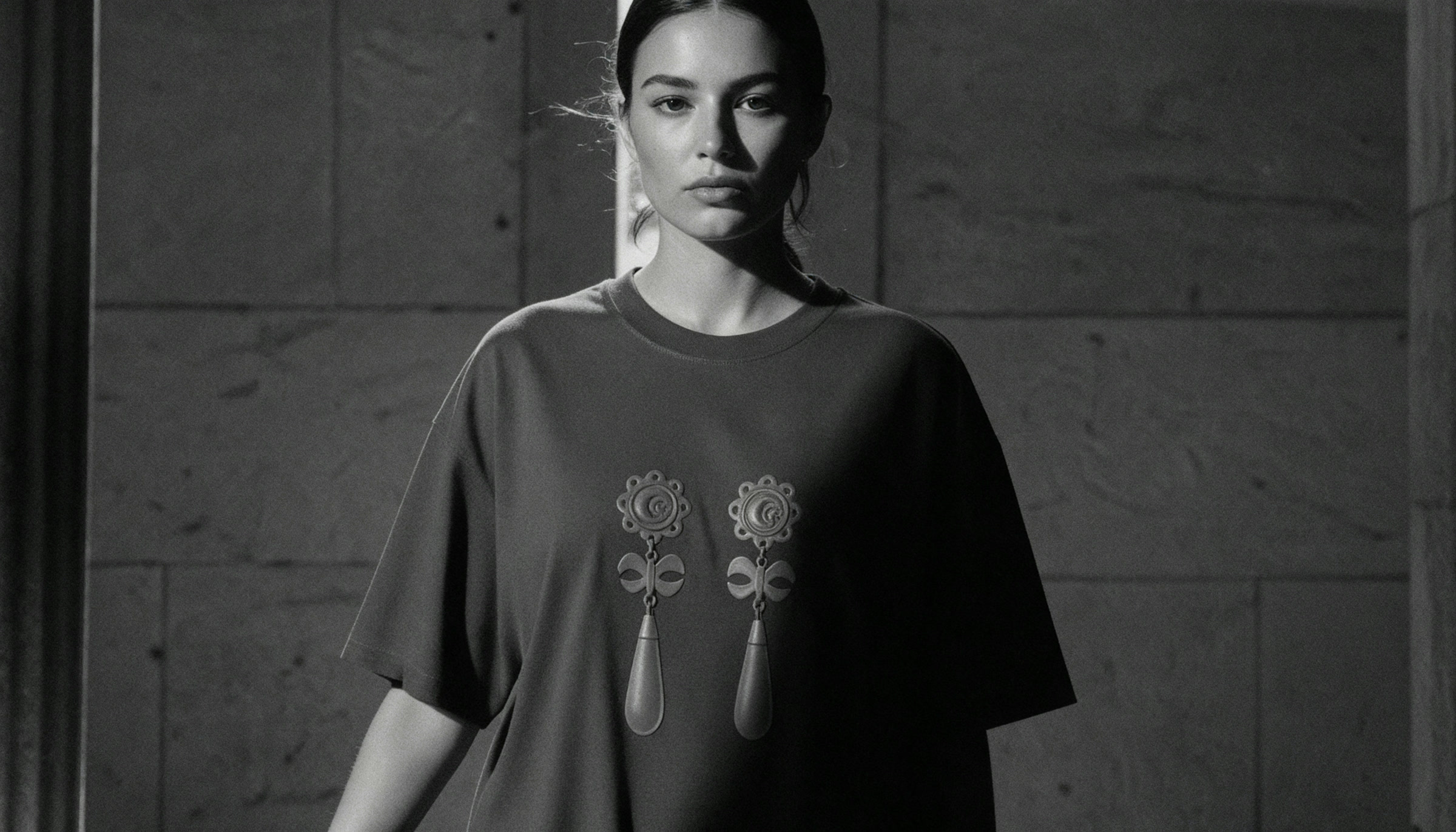
The earrings printed on the chest at the size they are drawn on the sleeve, and worn in the building they came out of.
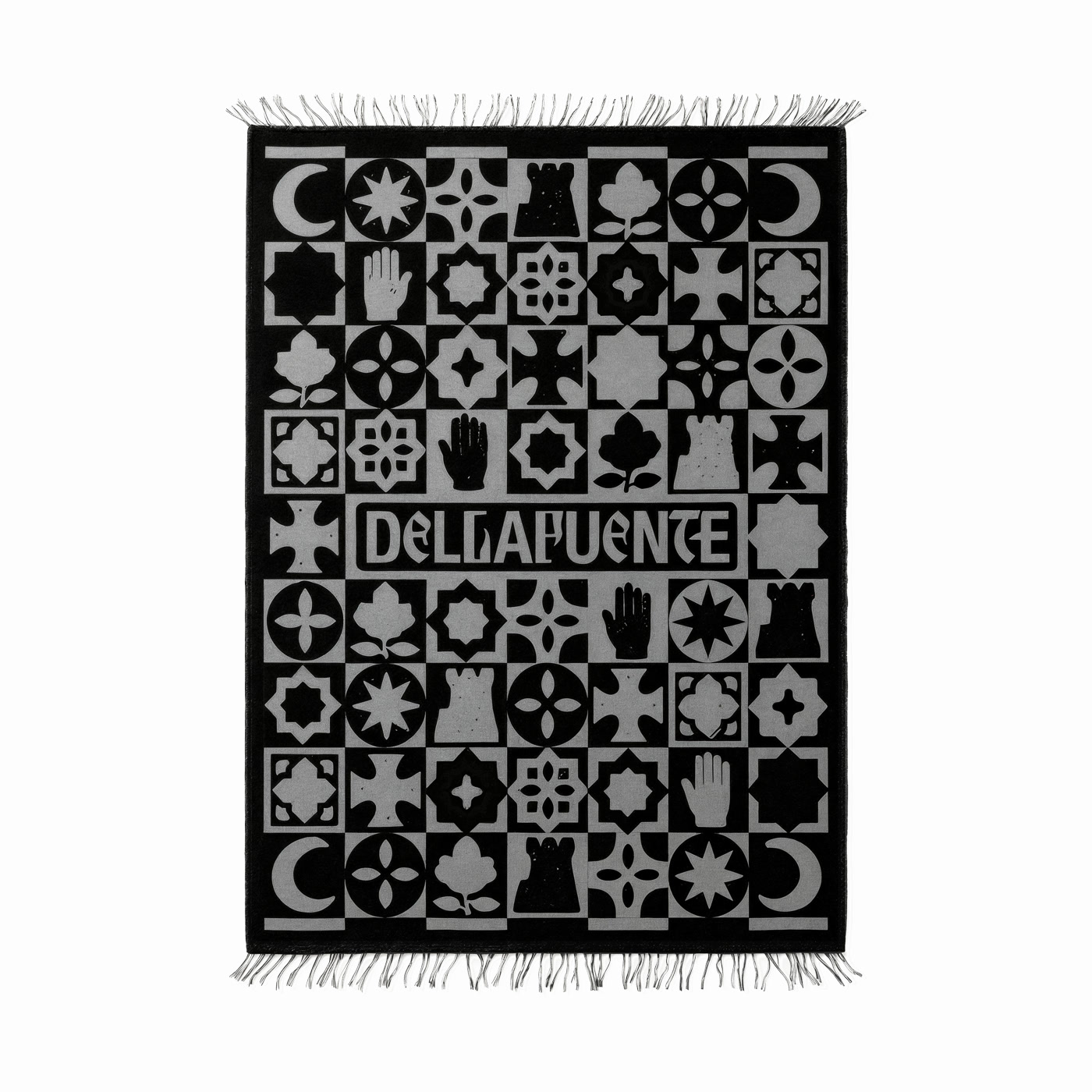
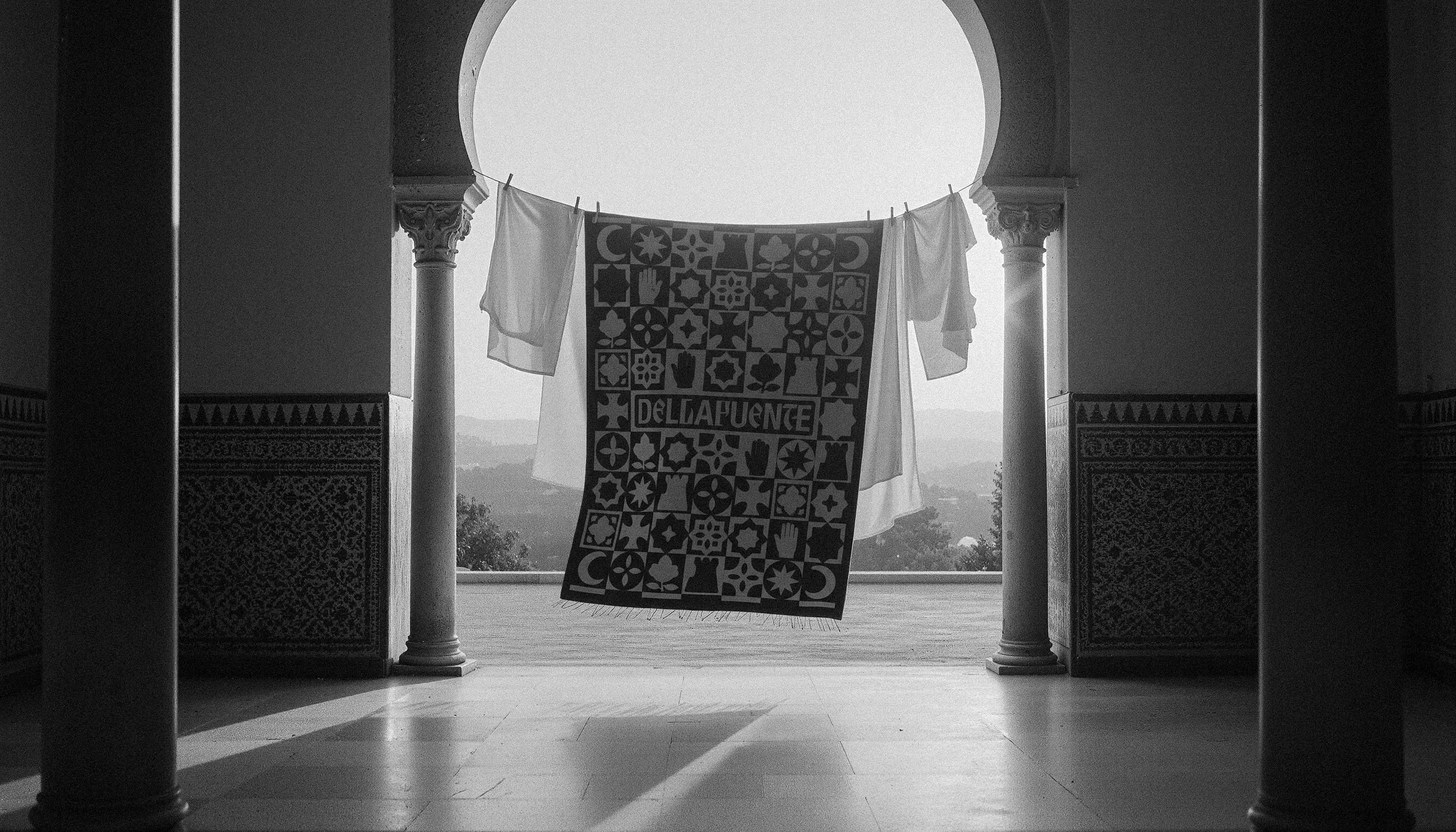
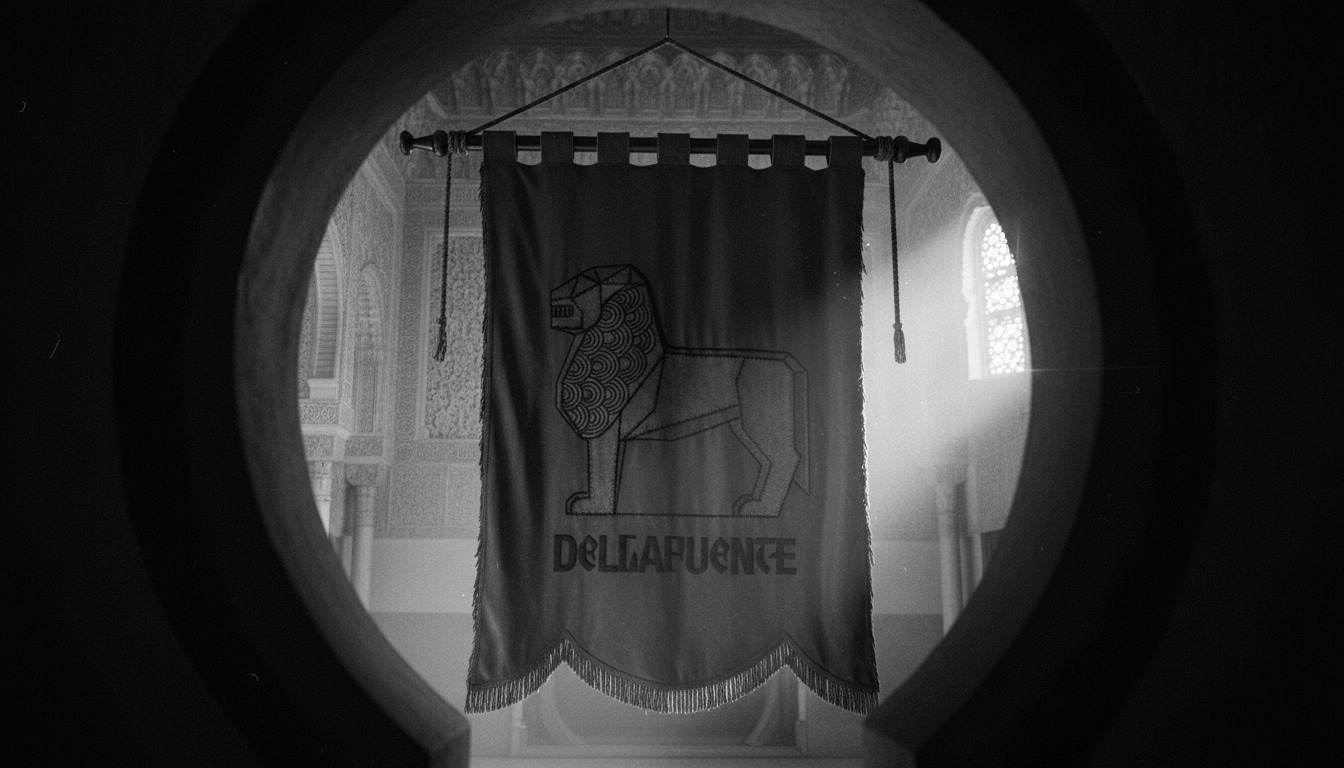
The blanket is introduced hung between two columns like a standard, before it is ever shown as a product.
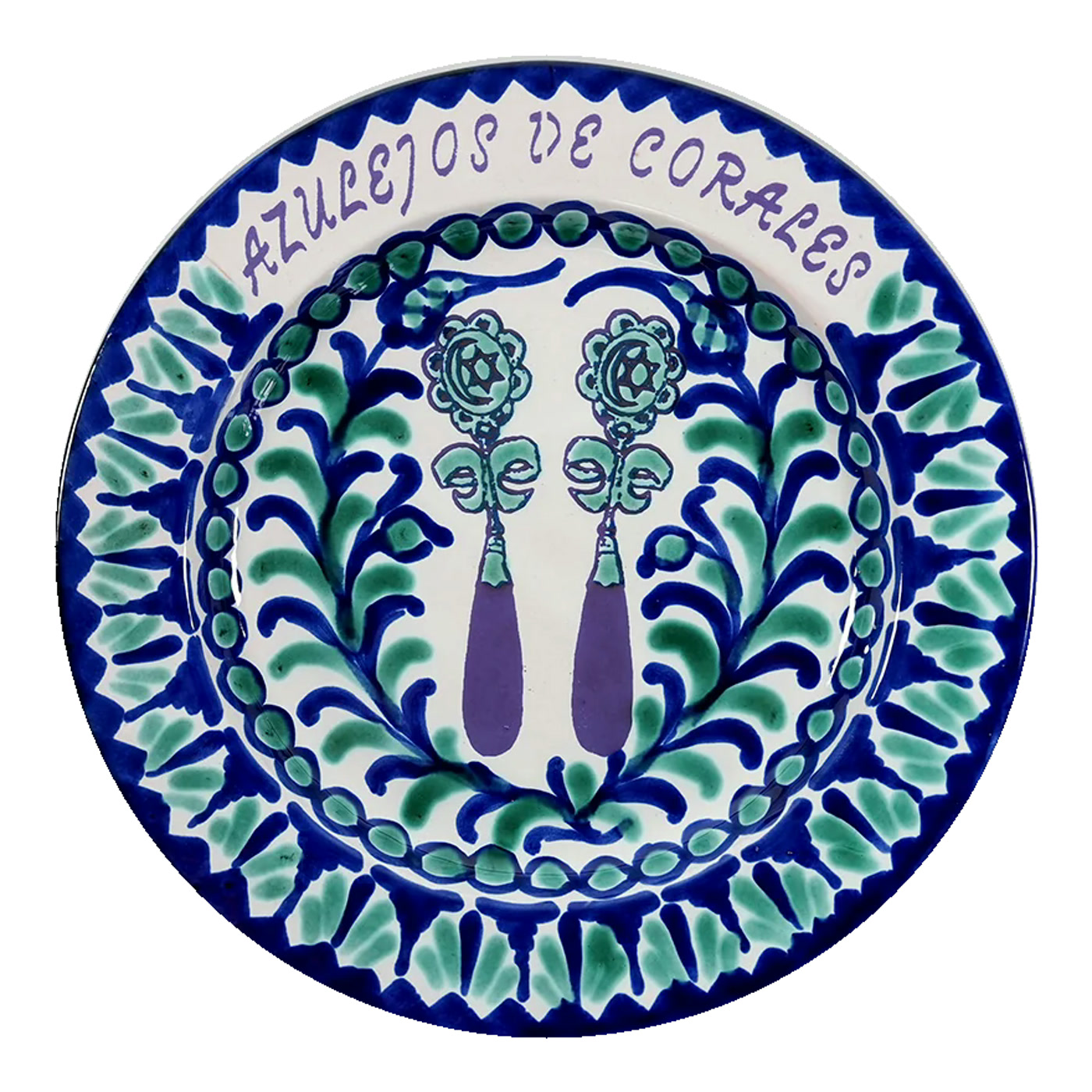
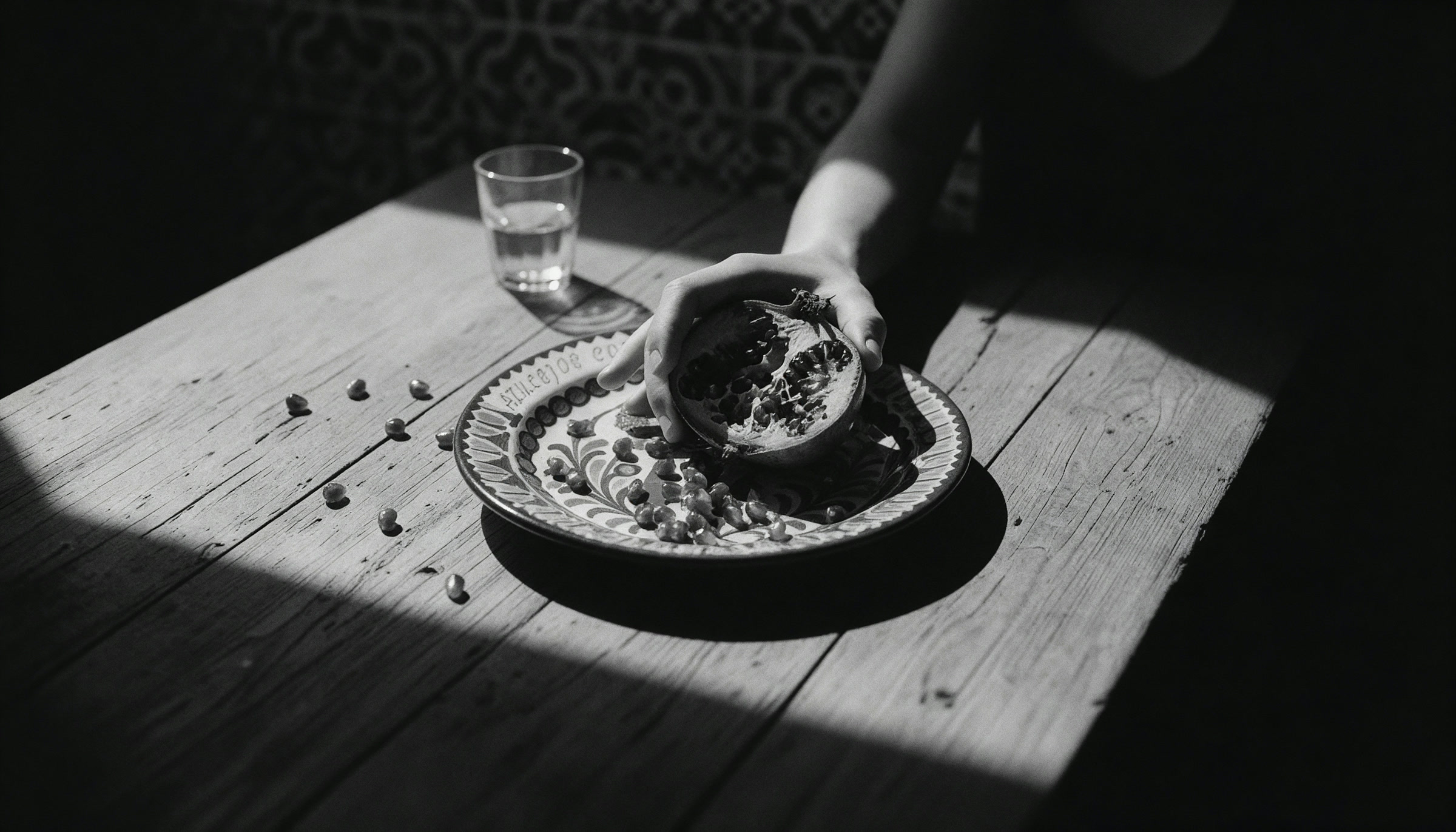
The plate is served, not styled — the same ceramic that ends up photographed flat for the shop.
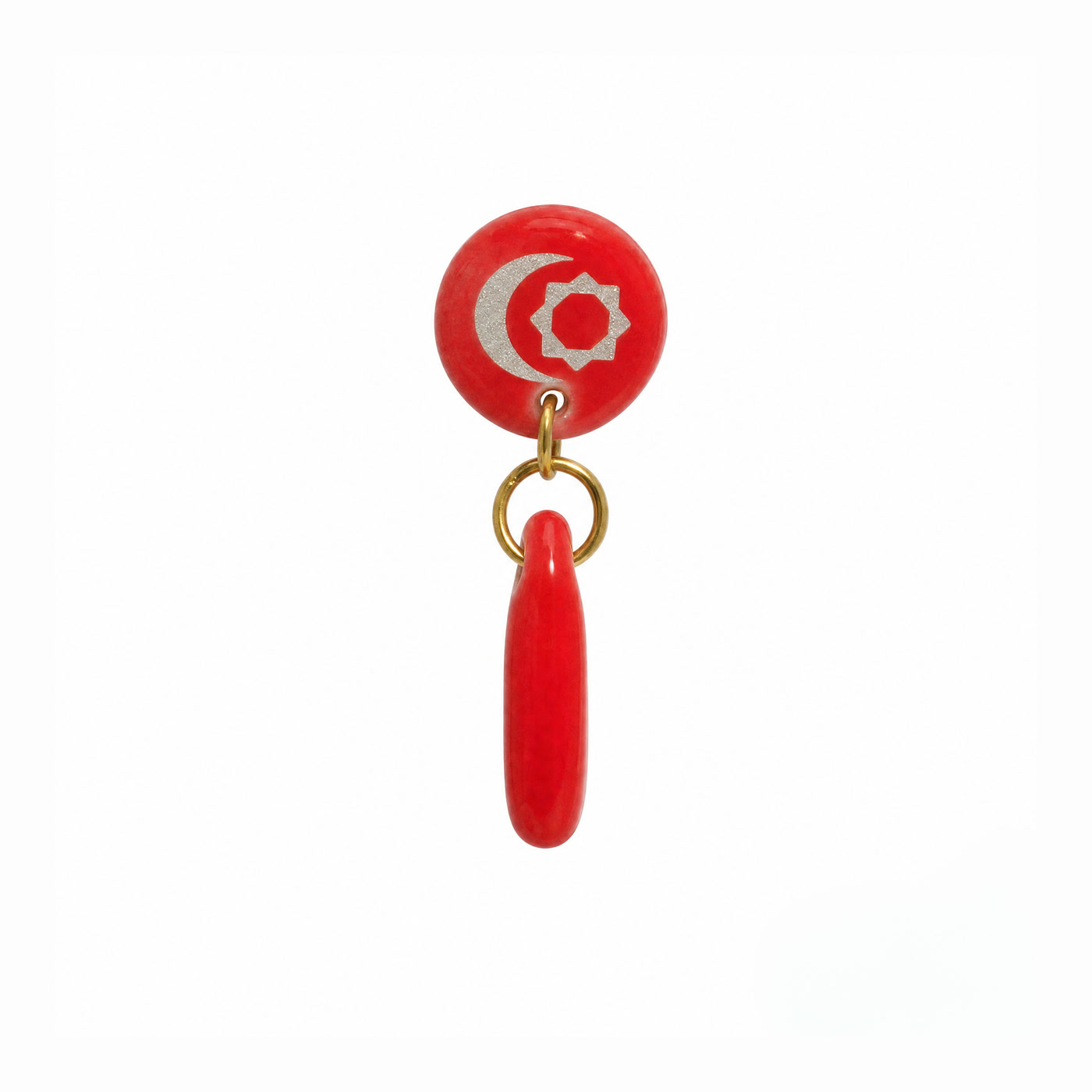
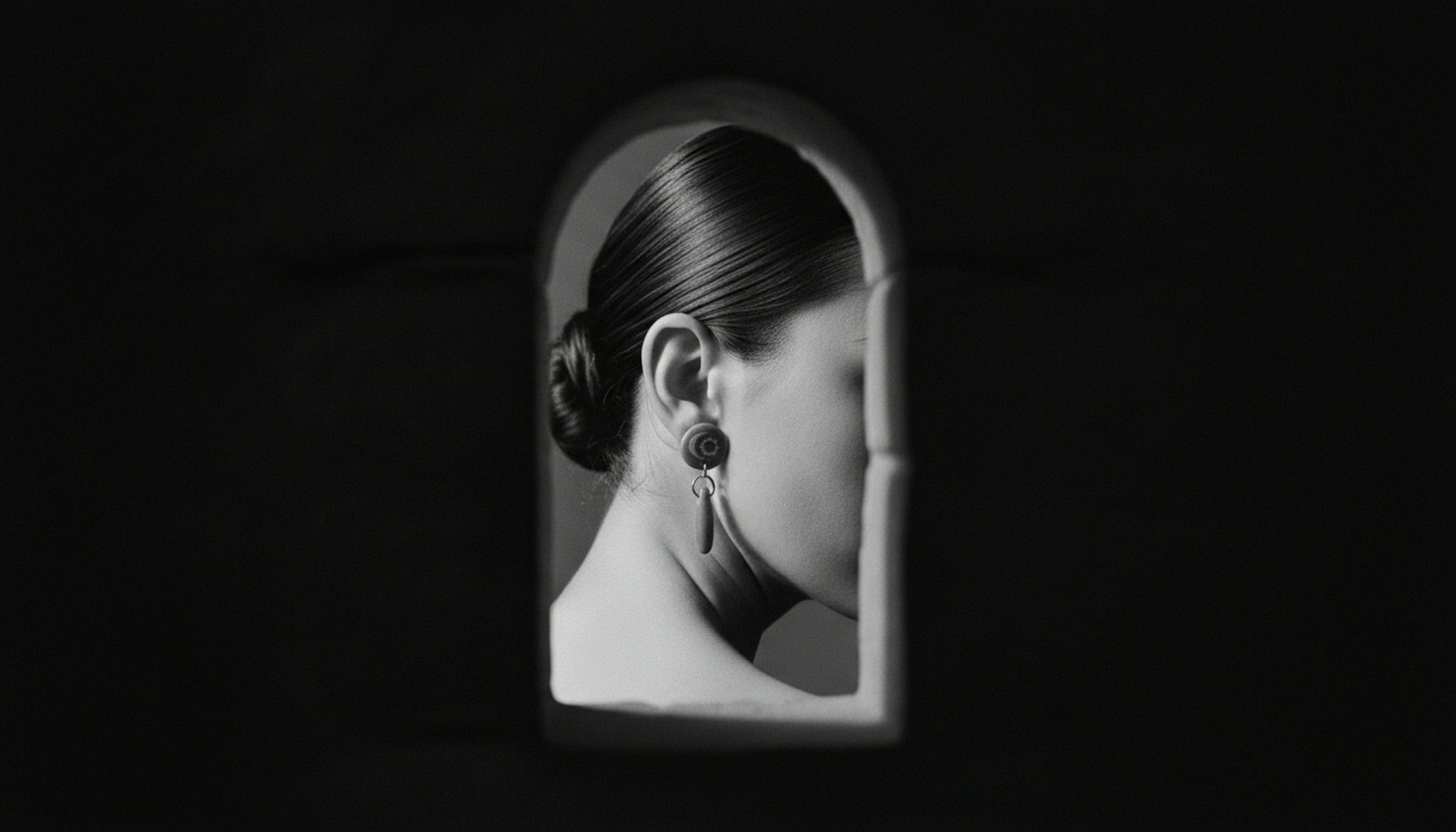
The earring appears first as something worn, framed in a doorway of light, and only afterwards as an object you can hold.
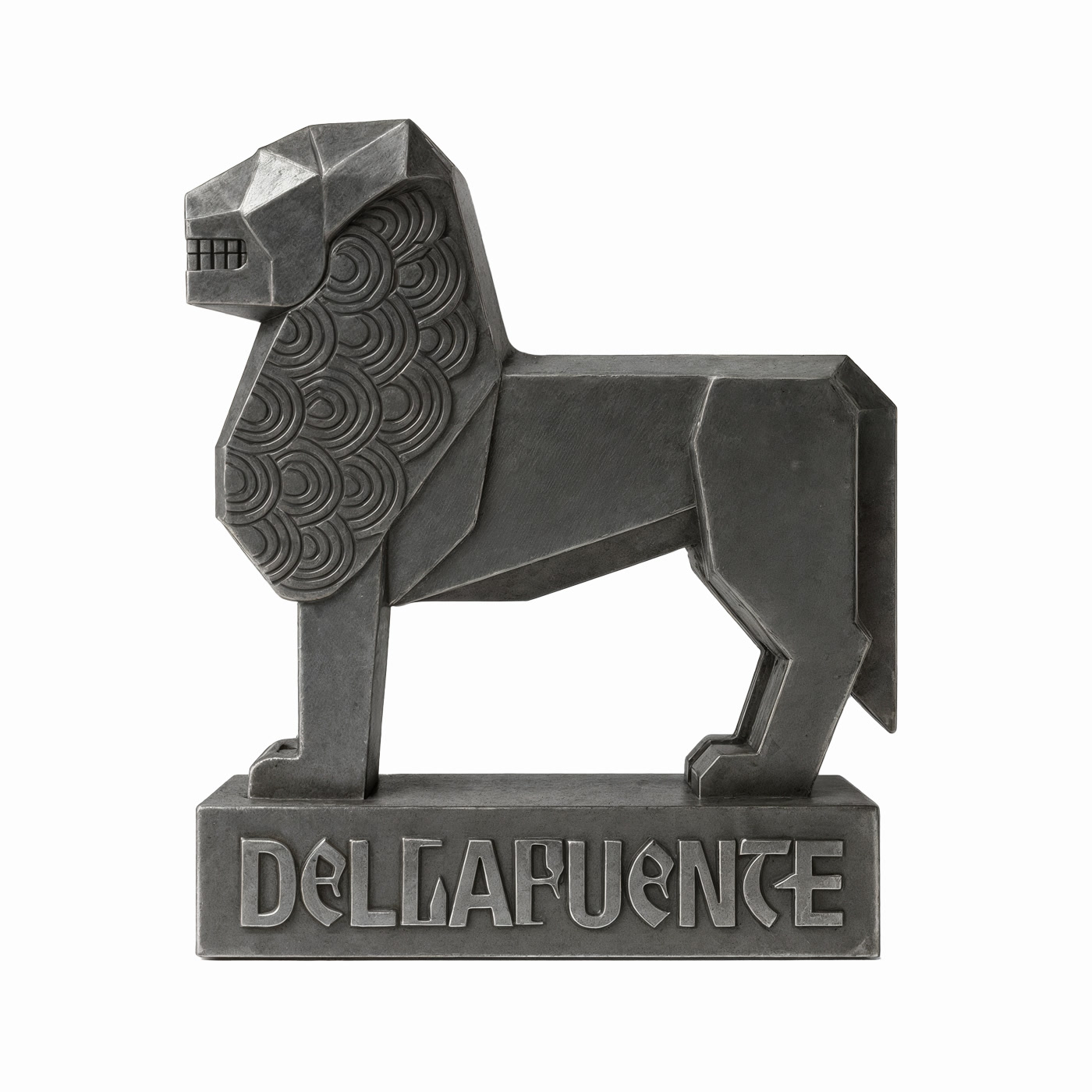
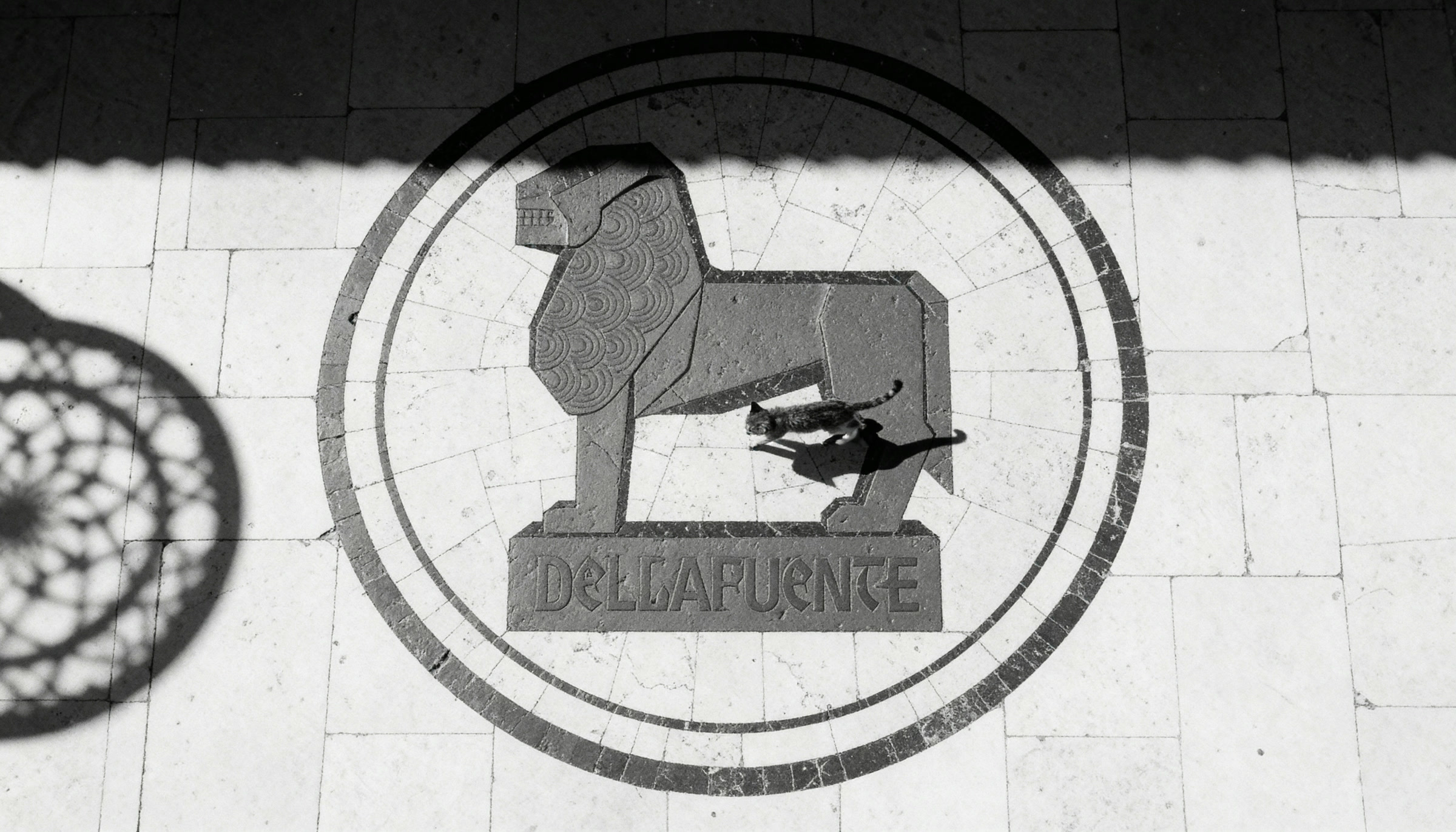
The same lion, cut into the building at the scale of a doorway and cast small enough to stand on a shelf.
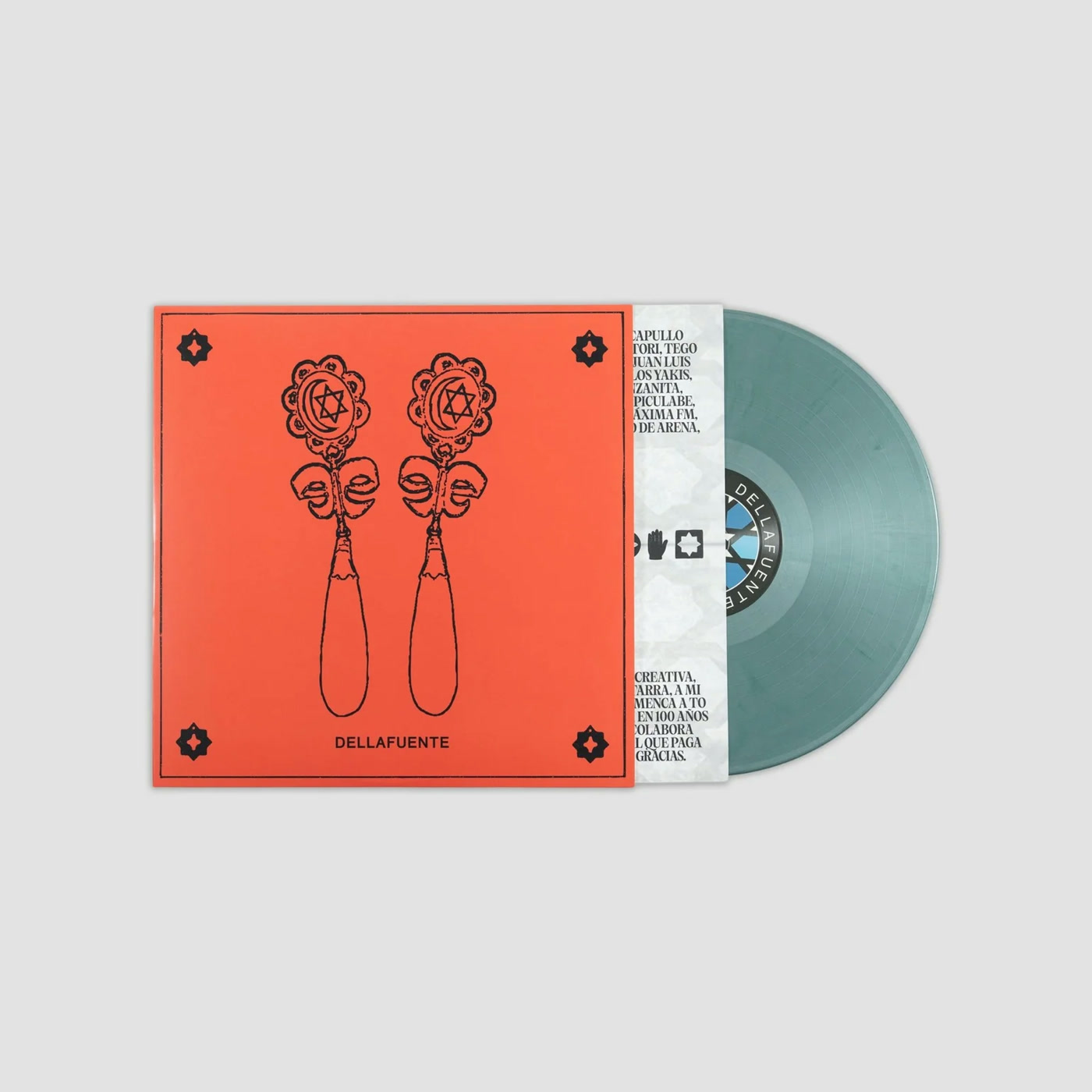
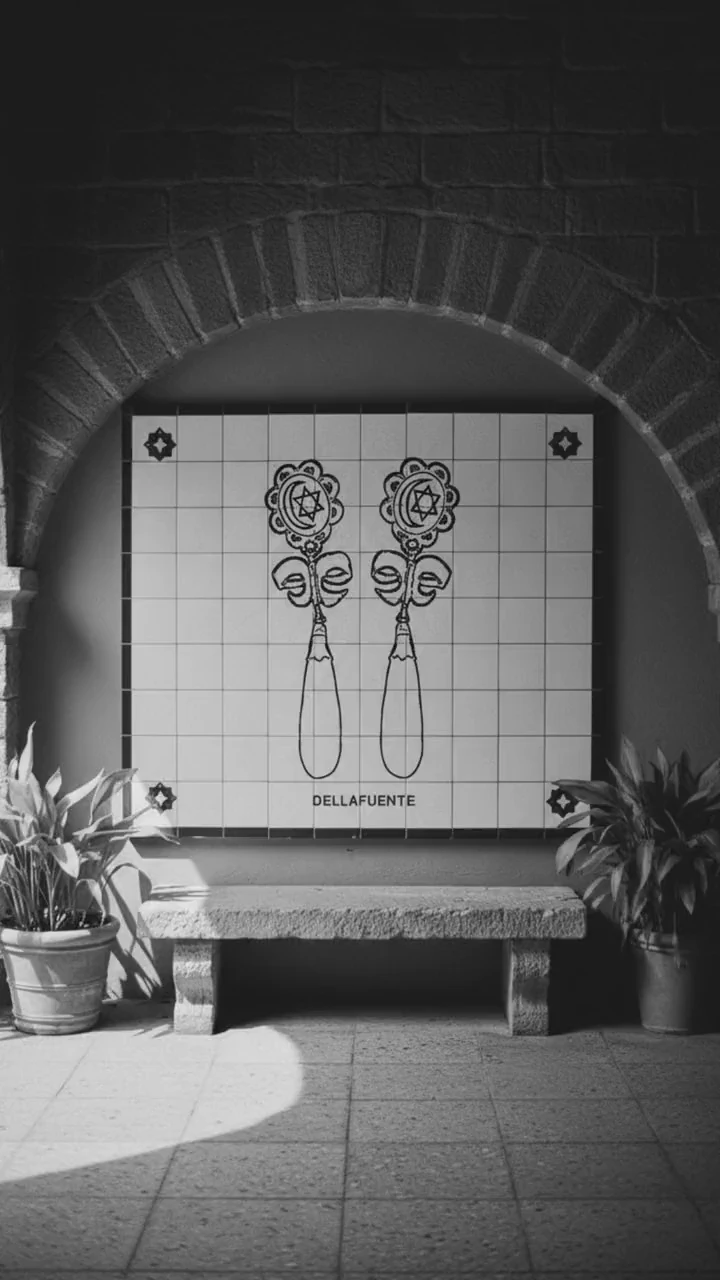
This is not the film reframed. It is a second piece, built entirely from stills generated out of the vinyl cover — the same two flowers, hung as a banner and carried through the whole building.
The research
What we looked at
The references were not films. They were his own record.
Azulejos de Corales came out on 22 September 2015, self-released, written and recorded in four to six weeks with no unifying concept — a catalogue of what he could do rather than an album about something. It sold out a national tour, ended the part of his life where this was a hobby, and is now treated as the record that opened the path Rosalia would later walk. Ten years later it needed a world, not a set of images.
The cover was already the brief: two red coral earrings with gold filigree on a grey-blue tiled ground. Tile for Andalusi architecture, coral for flamenco jewellery — roots and freshness in a single square. People have it tattooed. Everything the drop became had to come back to it.
Then we read the lyrics for themes rather than for lines to illustrate, and the themes gave us objects. Family and grandmothers as the guiding anchor. Popular faith: bendito, holy cards, the purity Camaron talks about. Domestic love as bills, sheets, a kitchen, getting dressed, patience. The street as motorbikes, cards, a match, night. Emigration as leaving, and as work. Those objects became the hero elements of the film, which is why nothing in frame is decoration.
Individual songs worked as briefs. Azulejos de Corales, No Vendo Humo and Muchas Caricias gave the earring, the moon and the tile. El Timon de Mi Nave, Pasa Pagina and Consentia gave the cards, the blanket, the turntable and food arriving at the table. Al Vacio, Jandones and Tengo un Hermano Loco gave the motorbikes, the match, and vinyl treated as a street relic in grainy black and white.
And we wrote down what the world is not. That list did as much work as the references did: it is what kept the Alhambra from sliding into a generic Arabic aesthetic, and kept every decision answerable to one question — does this belong to the patio or not.
References
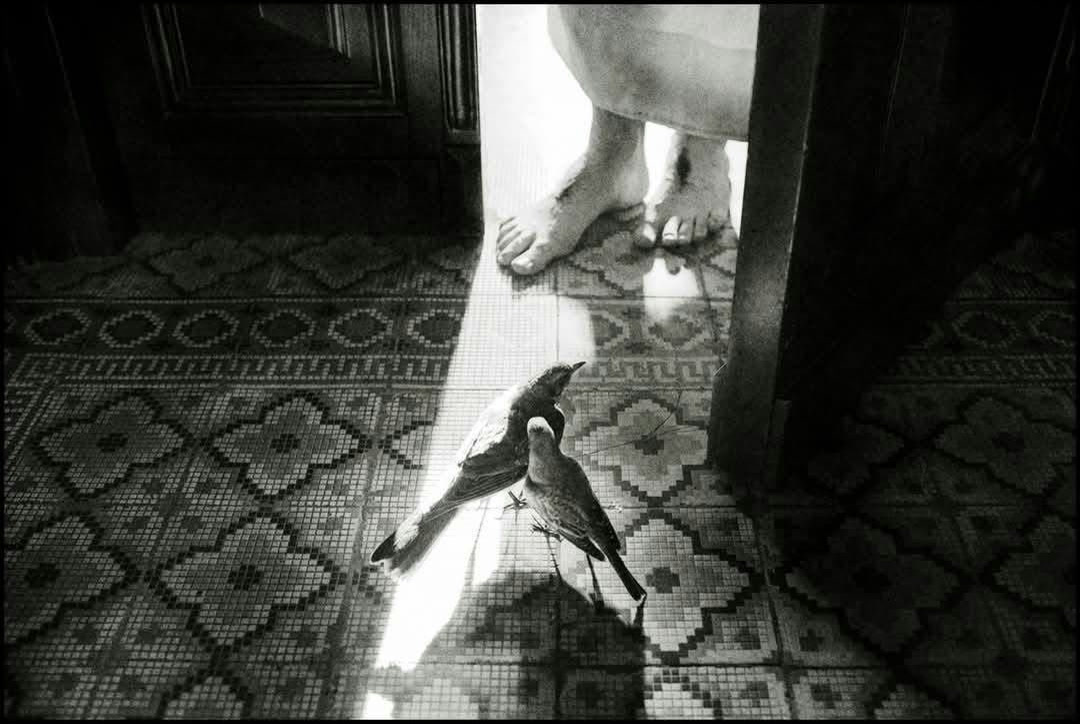
Reference 01
Bare feet and a bird on a patterned tiled floor, in a doorway of light
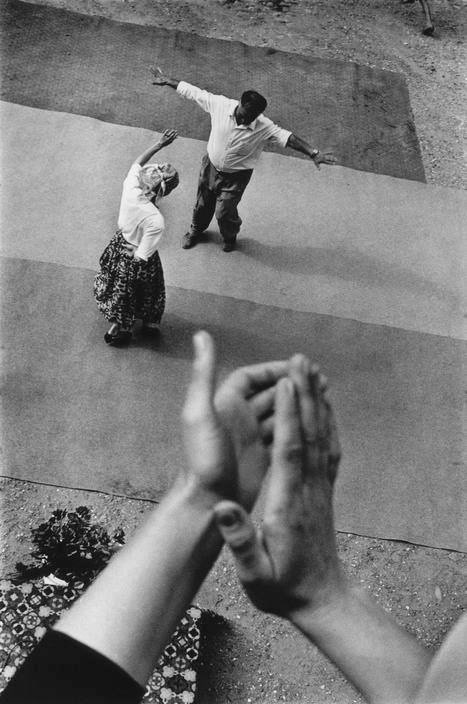
Reference 02
Hands clapping above a dancing couple, from Cristina Garcia Rodero
Reference 03
A woman laughing with flowers in her hair, from Cristina Garcia Rodero
Reference 04
A man in a hat alone in a white street, from Pierre Verger
Reference 05
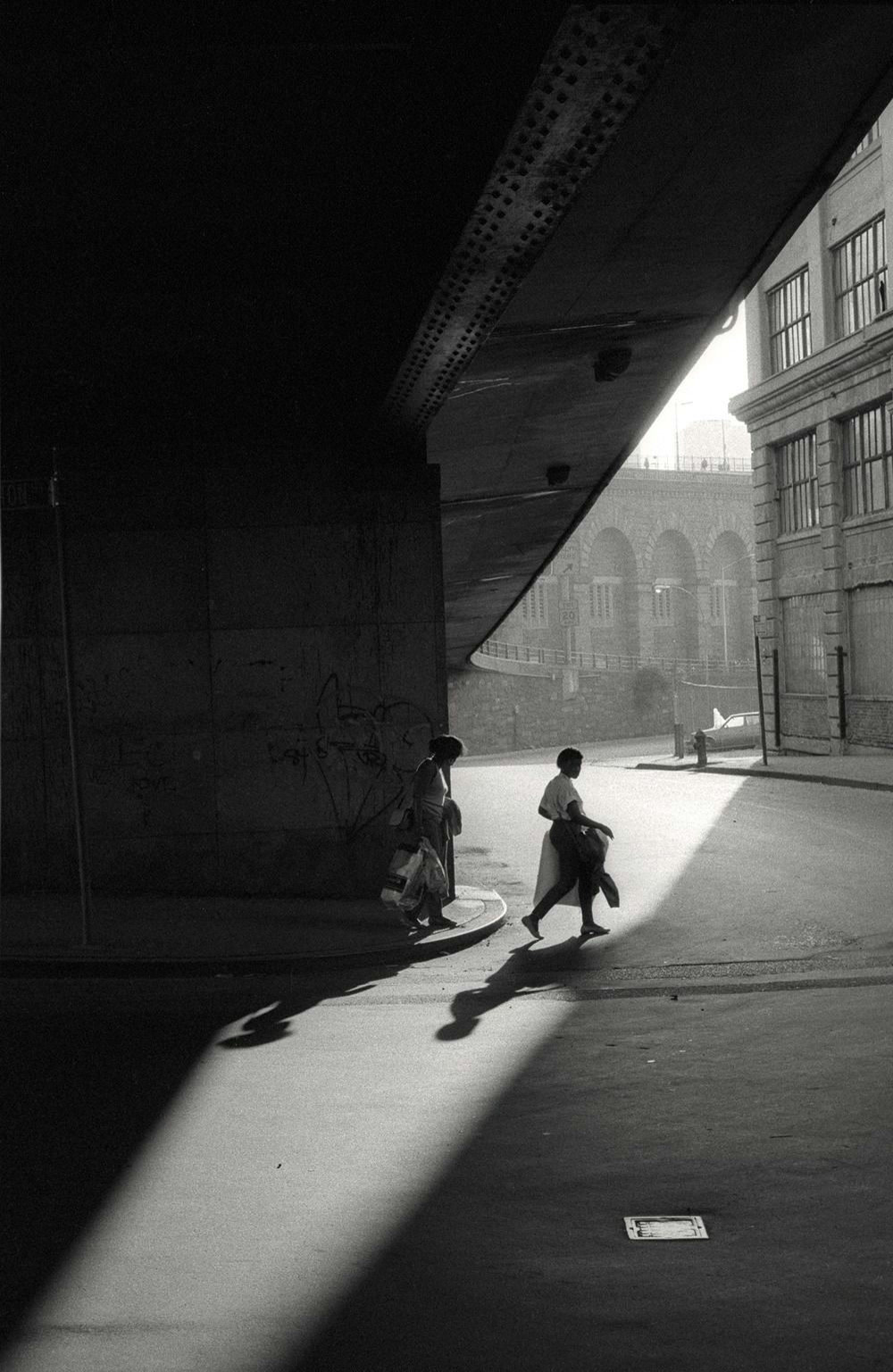
A child crossing a dark arcade into the light
Reference 06
Children running through a square as pigeons scatter
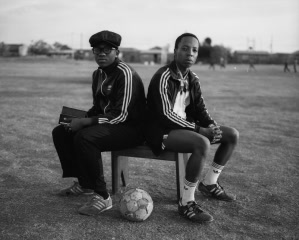
Reference 07
Two young men sitting on a bench with a football
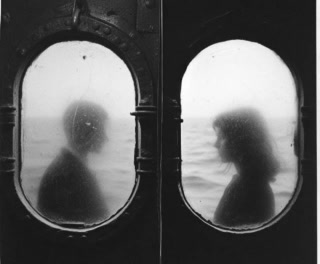
Reference 08
Two figures seen through a pair of ship portholes
Reference images gathered for the moodboard. Photographs by Cristina Garcia Rodero and Pierre Verger, reproduced here as references only.
The proposal
The first tests
None of these are in the film. They are the first images made for the proposal, when the world was still being argued about — the earrings as a shawl drying over the city, the drawing painted straight onto a wall, a bicycle wheel crossing the foreground, cards dealt under the shadow of a grille. Some of it survived as a rule. Most of it was thrown away.
An unused test image made for the Dellafuente proposal